
The Rising Trend of Collar Cameras & How Your Feline Could Be the Next Social Media Star

Have you ever wondered what your cat gets up to when they slink away through the cat flap or disappear behind the couch? Where do they go when they’re out exploring? Who do they meet? What secret adventures fill their days while we’re busy with our human concerns?
Thanks to the growing trend of collar cameras, cat parents everywhere are finally getting answers to these burning questions—and the footage is nothing short of fascinating. Unlike the perfectly polished content of mainstream feline influencers, collar camera cats are capturing raw, authentic glimpses into their daily lives, creating a whole new genre of pet content that’s taking social media by storm.
Let’s jump right into this fascinating world of feline filmmakers, discover the technology making it possible, and explore how your own whiskered companion could become the next collar camera sensation!
The Collar Camera Revolution: How Cats Became Their Own Documentarians
The cat video has been internet royalty since the dawn of YouTube, but collar cameras have revolutionized the genre. Instead of humans filming cats doing cute things, these tiny devices let cats capture their own adventures from a truly unique perspective—giving viewers an authentic cat’s-eye view of the world.
What makes collar camera content so mesmerizing is its unfiltered nature. There’s no staging, no perfect lighting, no human direction—just the pure, kinetic experience of seeing the world through feline eyes. When a cat stalks through tall grass, leaps onto a fence, or encounters another animal, viewers get to experience that moment exactly as the cat does.
This authenticity has struck a chord with audiences. In 2024 alone, collar camera cat content accumulated more than 2.5 billion views on TikTok, with Instagram and YouTube numbers not far behind. It turns out that experiencing a day in the life of a cat—complete with all the darting movements, sudden pounces, and curious investigations—is exactly the kind of content people can’t get enough of.
The Rising Stars of Collar Cam Content
Unlike mainstream pet celebrities who are often carefully groomed and posed by their owners, collar camera cats represent a more democratic form of pet fame. Let’s meet some of the pioneers and rising stars in this growing field:
@gonzoisacat (607K TikTok followers)
Gonzo, a Los Angeles-based explorer, has become the undisputed king of the collar camera world. His footage epitomizes what fans love about the genre—raw, unfiltered adventures across urban environments. Equipped with an Insta360 GO 3 camera, Gonzo documents his journeys scaling rooftops, investigating urban wildlife, and navigating the sprawling cityscape.
His breakthrough moment came with a 2023 video documenting an encounter with an opossum—a shaky, intimate look at interspecies curiosity that garnered over 8.2 million views. What made the video so compelling wasn’t perfect cinematography but its vulnerability and authenticity. As his owner Derek Boonstra explains, “The camera isn’t directing Gonzo—it’s just witnessing his natural curiosity.”
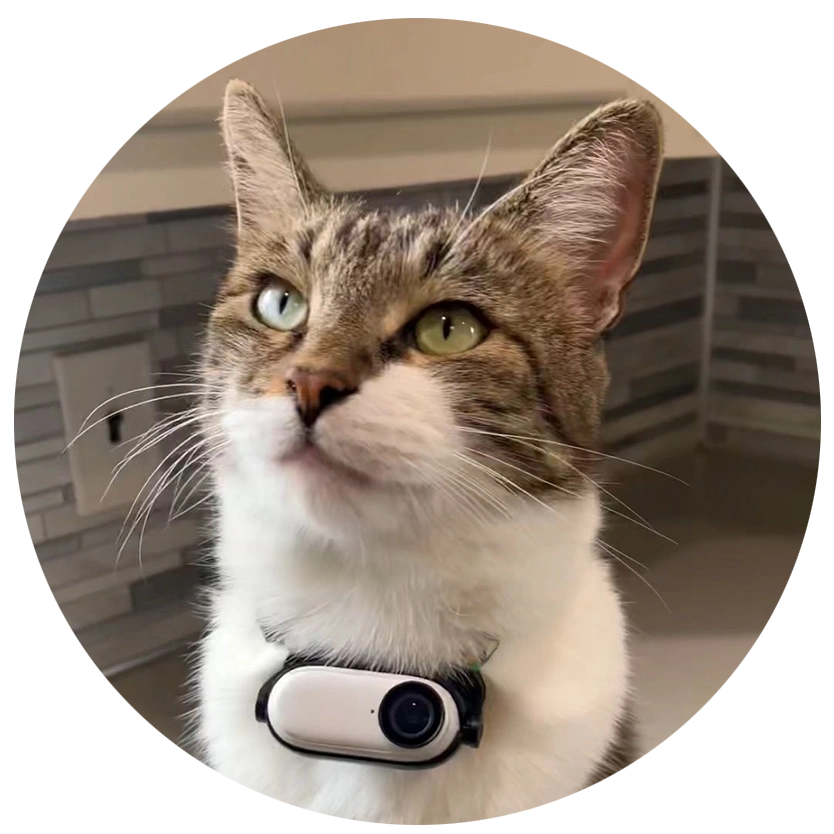
@mrkitters (5M TikTok followers)
This Indiana tabby has developed a unique niche by combining exploration footage with incredible audio clarity. His collar camera’s dual microphones capture the ASMR-worthy sounds of his adventures—the crisp rustling of grass, chirps at birds, and even his own purrs.
Mr. Kitters’ success demonstrates the monetization potential of collar camera content. Through strategic sponsorships with brands like Pretty Litter and Genshin Impact, his account was generating approximately $8,000 monthly by late 2023. His owner Scott Irwin attributes this success to what he calls “auditory intimacy”—the feeling that viewers are eavesdropping on cat conversations and experiencing the world through both feline eyes and ears.
These creators are pushing the boundaries of what collar camera content can be, developing unique artistic styles within the medium.
The Tech Behind the Trend: Understanding the Collar Camera
The collar camera boom wouldn’t be possible without recent advances in miniaturized camera technology. Today’s devices combine impressive technical specifications with cat-friendly design features that ensure comfort and safety.
Leading Models and Their Specifications
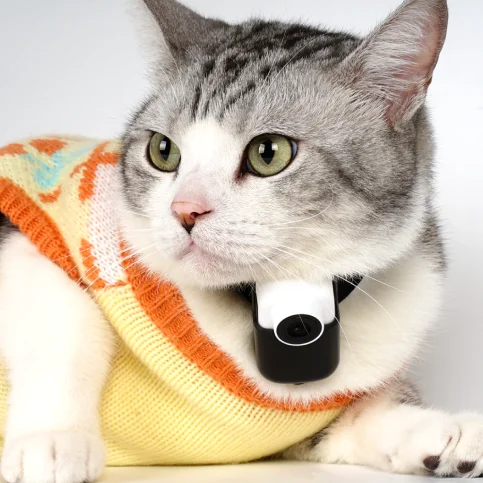
The CM-03 Cat Collar Camera exemplifies current technology with its Sony 170° wide-angle lens, 3-axis stabilization, and 4K/30fps video capture capabilities. These features prevent motion blur during high-speed chases or climbs, ensuring viewable footage even during energetic moments. Weighing just 28g (less than 1% of an average cat’s body weight), it’s designed not to impede movement while still housing a 400mAh battery that provides approximately 50 minutes of continuous recording.

The Insta360 GO 3 represents another popular option, trading slightly lower resolution (2.7K) for an ultra-compact size (26.5g) and innovative magnetic mounting systems that cats can naturally shed if the camera gets snagged on something.
Emerging Innovations
The latest generation of collar cameras includes features like:
- Pre-recording buffers: Capturing 30 seconds of footage before you even press record, ensuring unexpected moments aren’t missed
- Dual microphones: Providing directional audio that captures purrs, chirps, and environmental sounds with remarkable clarity
- AI-powered highlight reels: Automatically editing hours of footage into 15-second clips by detecting periods of interesting motion or activity
While DIY alternatives exist—with hobbyists attempting custom builds using ESP32S3 boards paired with GPS modules—most cat owners find pre-built commercial solutions more practical and reliable despite the higher cost.
Turning Your Cat Into a Social Media Cinematographer
Ready to help your cat join the ranks of collar camera creators? Here’s a comprehensive guide to getting started safely and effectively.
Assessing If Your Cat Is a Good Candidate
Not every cat is suited for collar camera fame. Before investing in equipment, honestly evaluate whether your feline has the right temperament for this adventure.
Good candidates typically:
- Are already comfortable wearing a collar
- Have a curious, exploratory nature
- Don’t show signs of anxiety when wearing new things
- Have a history of adapting well to new experiences
As cat behaviorist Kristiina Wilson warns, “Never force outdoor use. If your cat resists the harness indoors, they’re not candidates for collar-cam fame.” Your cat’s comfort should always be the priority.
The Step-by-Step Acclimation Protocol
If your cat seems like a good candidate, follow this gradual introduction process:
- Harness First: Introduce a plain collar or harness for 5-10 minute intervals daily, pairing with treats to build positive associations. Keep sessions short and positive.
- Weight Simulation: Tape a small 25g object (approximately the weight of a camera) to the harness over 1-2 weeks, carefully monitoring for any gait changes or signs of irritation.
- Static Recording: Mount a powered-off camera to help your cat adjust to the feeling, gradually increasing wear time up to an hour as comfort levels improve.
- Active Trials: Begin with 5-minute indoor recording sessions. Review the footage not just for content but to identify any stress indicators (rapid head movements, excessive grooming after removal).
Throughout this process, be patient and attentive to your cat’s signals. Some cats may adapt within days, while others might need weeks to feel comfortable. Remember that not every cat will enjoy wearing a camera, and that’s perfectly okay!
Technical Optimization Tips
Once your cat is comfortable with the camera, these technical adjustments can help capture better footage:
- Angle Adjustment: Position the camera between the shoulder blades and tilted approximately 15° upward to capture forward motion without excessive ground footage.
- Scheduled Filming: Align recording sessions with your cat’s natural activity peaks (typically dawn and dusk) using cameras with timer functions for the most engaging content.
- Lighting Calibration: For indoor cats, select models with f/1.8 apertures or higher to compensate for lower light conditions and ensure clear footage.
Editing and Sharing: From Raw Footage to Viral Content
The difference between ordinary collar camera footage and viral content often comes down to thoughtful editing. Here are some tips for transforming your cat’s adventures into engaging social media posts:
- Keep It Short: The most successful collar camera clips typically run between 15-60 seconds, highlighting the most interesting moments rather than lengthy continuous footage.
- Focus on Interactions: Encounters with other animals, interesting environments, or unexpected moments typically generate the most engagement.
- Add Context: Consider adding text overlays or voiceovers that interpret your cat’s behavior or add humor to the situation.
- Music Matters: The right soundtrack can elevate collar camera footage, but be mindful of using royalty-free options to avoid copyright issues.
- Consistent Posting: Successful accounts typically post 2-3 times weekly, establishing a reliable rhythm that builds audience anticipation.
Remember that building a following takes time. Even accounts that now boast millions of followers typically spent months developing their audience before experiencing significant growth.
Ethical Considerations: Responsible Collar Camera Use
As fun as collar cameras can be, they also come with responsibilities that every cat parent should take seriously.
Privacy and Consent
Collar cameras risk recording non-consenting individuals—particularly for cats that roam in shared spaces. Responsible practices include:
- Blurring identifiable faces and license plates in post-production
- Avoiding footage of private property unless you have permission
- Disabling GPS tagging on public uploads to protect your cat’s regular locations
Animal Welfare
The International Association of Animal Behavior Consultants (IAABC) issued guidelines in 2024 that provide important safety parameters:
- Cameras should never exceed 3% of a cat’s body weight (maximum 35g for a 4.5kg cat)
- Recording sessions should be limited to 90 minutes to prevent device overheating
- Equipment should be removed immediately if any chafing or balance issues arise
Your cat’s wellbeing should always take precedence over content creation. If they show any signs of distress or discomfort, it’s time to pause or reassess your approach.
The Future of Feline Wearables
The collar camera trend is just the beginning of what promises to be an exciting evolution in pet wearable technology. Next-generation devices aim to merge cameras with health monitoring capabilities, as previewed by AI-driven collars that track vital signs through movement patterns.
Emerging prototypes integrate features like:
- Hydration sensors: Detecting lick rates via throat micro-vibrations
- Stress biomarkers: Analyzing cortisol levels from fur oils
- Haptic feedback: Gentle vibrations that can guide cats away from potential hazards
These advancements promise to deepen our understanding of feline behavior while raising important conversations about the balance between technology, surveillance, and animal agency.
Why Collar Cameras Are More Than Just Fun
Beyond the entertainment value, collar cameras offer unexpected benefits for both cats and their humans:
- Behavioral Insights: Footage can reveal aspects of your cat’s personality and preferences that might otherwise remain hidden, helping you better understand their needs.
- Health Monitoring: Reviewing footage can sometimes identify subtle changes in movement or behavior that might indicate health issues before they become obvious.
- Environmental Enrichment: Knowing where your cat goes and what they enjoy can help you create more stimulating environments at home.
- Strengthened Bonds: Many owners report feeling more connected to their cats after seeing the world through their eyes, developing a new appreciation for their pet’s experiences and perspective.
Could Your Cat Be the Next Collar Camera Star?
While not every cat will achieve Gonzo-level fame, the democratized nature of collar camera content means there’s always room for new feline filmmakers. The most successful accounts often find a unique angle—whether it’s breathtaking locations, unusual adventures, or a particularly charismatic cat personality.
The beauty of this trend is that authentic content typically outperforms highly produced footage. Viewers are drawn to the raw, unfiltered glimpse into cat life, meaning your ordinary housecat could potentially connect with audiences just by being themselves.
If you decide to embark on this adventure, remember to:
- Prioritize your cat’s comfort and wellbeing above all else
- Start small and be patient with the acclimation process
- Focus on what makes your cat unique rather than trying to replicate others
- Have realistic expectations about growth and engagement
- Enjoy the process of seeing the world through your cat’s eyes
Final Thoughts: Seeing the World Through New Eyes
Perhaps the most magical aspect of collar cameras is how they’ve shifted our perspective. For millennia, humans have wondered what the world looks like to our feline companions. Now, technology has finally given us a glimpse of that reality—the darting focus, the sudden leaps, and the curious investigations that make up a cat’s experience.
Whether your cat becomes the next social media sensation or simply gives you a private window into their world, collar cameras offer a unique opportunity to bridge the gap between human and feline experience. In seeing what our cats see, we develop a deeper appreciation for their remarkable abilities and unique perspectives.
Have you tried a collar camera with your cat? We’d love to hear about your experiences in the comments! And if you’re just getting started, let us know what you’re most excited to discover about your feline friend’s secret life!
Loved this post? Explore more helpful cat care tips on our cat blog and join our community of cat lovers to share stories and advice!
About the Author: Milly Brown

A quick heads up
Some links in our posts are affiliate links. If you buy through one, we may earn a small commission at no extra cost to you. How it works
Shop the aisles
Hand-picked, well-reviewed gear for every kind of cat.
How old is your cat in human years?
Our free calculator works it out in seconds. No math, no judgment.
Fresh off the blog

Halloween hazards: the candy, plants, and decor that send cats to the ER
Every October, the same picture makes the rounds. A cat sitting inside a carved pumpkin, candle flickering behind it, looking either delighted or deeply betrayed. It is a great photo. It is also a fairly complete summary of what goes wrong for cats this time of year: an open flame, a rotting gourd, and an animal who will climb into anything that looks interesting.
The good news is that the list of genuine Halloween hazards for cats is short. The less good news is that it is not the list most people expect. Chocolate gets all the warnings, yet cats rarely eat enough of it to matter. Meanwhile, the bouquet on the dining table and the fake cobweb on the banister get no warnings at all.
Here is what we watch for, roughly in order of how much damage each one can do.
Lilies in fall arrangements: the quiet emergency
If you remember one thing from this post, make it this. True lilies (the Lilium family, which includes Easter, tiger, Asiatic, and stargazer lilies) and daylilies (Hemerocallis) can cause acute kidney failure in cats. Every part of the plant is toxic. The petals, the leaves, the pollen, and even the water in the vase.
Lilies show up constantly in autumn bouquets, harvest centerpieces, and the “thanks for having us” flowers guests bring to Halloween parties. A cat does not need to eat the flower. Brushing past it, getting pollen on the fur, and grooming it off later can be enough.
Early signs include vomiting, drooling, hiding, and not eating, usually within a few hours. Kidney damage can follow within a day or two, and by the time the obvious symptoms show, the window for the most effective treatment is closing.
Fall chrysanthemums are worth a mention too. They are much milder, usually causing drooling, vomiting, or skin irritation, but they sit on a lot of porches and steps in October. If you have a cat who goes outside or a doorway they like to sniff around, put the potted chrysanthemums somewhere out of reach.
Things that look like string
Cats are built to chase things that wiggle, and the tiny backward-facing barbs on their tongues make it hard for them to spit out anything long and thin once they start swallowing it. That is why string, ribbon, and tinsel are a classic cause of a dangerous condition called a linear foreign body, where the material bunches up the intestines as it moves through.
Halloween adds a few new versions of the same problem:
- Stretchy fake cobwebs. The polyester kind you pull apart over bushes and banisters. It is basically a giant ball of loose string.
- Costume ties and elastic. Drawstrings, ribbon bows, and the little elastic loops on masks.
- Decorative twine and raffia. Very common on hay bale and scarecrow displays.
- Curling ribbon on treat bags. Usually dropped on the floor around 8pm and forgotten.
If you ever see string hanging from your cat’s mouth or rear end, do not pull it. It may be anchored somewhere deeper, and tugging can damage the intestine. Call your vet.
The candy bowl, honestly assessed
Chocolate does contain theobromine and caffeine, both toxic to cats. Dark and baking chocolate carry far more than milk chocolate. In practice, though, most cats are not interested in sweets (they lack the taste receptors to enjoy sugar), so serious chocolate poisoning is much less common in cats than in dogs.
The bigger candy problem is usually the packaging. Foil, cellophane, and lollipop sticks can cause choking or a blockage, and a cat who would never eat a peanut butter cup will happily bat a crinkly wrapper under the couch and chew on it later. Sugar-free gum and candy are also best kept well away. Xylitol is famously dangerous for dogs; the evidence in cats is more limited, but this is not a good place to run the experiment.
Raisins, and the trail mix and cookies that contain them, belong on the high shelf too. Kidney problems from grapes and raisins are mostly documented in dogs, but poison control services still advise treating any exposure in a cat seriously.
Glow sticks, candles, and the jack-o’-lantern
Glow sticks are the hazard that causes the most panicked phone calls and the least lasting harm. The liquid inside tastes extremely bitter, so a cat who bites one usually drools, foams, and runs around looking as if the world has ended. It is distressing to watch, but the liquid is low in toxicity. Rinse the fur where it spilled, offer a little water or a bit of wet food to clear the taste, and call your vet if the drooling does not settle within a few minutes or the liquid got in an eye.
Candles are a much bigger concern. Cats walk along mantels, swish their tails over tabletops, and jump onto surfaces without checking what is there. Battery-operated tea lights inside jack-o’-lanterns cost a couple of dollars and remove the risk completely. We switched years ago, after one too many evenings watching Rosie swish her tail an inch above a candle on the windowsill like it was a personal dare.
Plain, cooked pumpkin is actually safe for cats in small amounts. A carved jack-o’-lantern is different. After a few days on the porch it starts to mold, and moldy food can make cats very sick. Toss it once it softens.
The front door is a hazard too
The single most common Halloween problem has nothing to do with eating anything. On a busy trick-or-treat night, the front door may open a hundred times. Each one is a chance for a curious or frightened cat to slip out into the dark, surrounded by noise, costumes, and more traffic than usual.
The fix is simple: on Halloween night, cats live in a closed room. We wrote a whole separate playbook on spotting and easing cat anxiety, and most of it applies here. The short version is a quiet room, familiar bedding, water, a litter box, and a door that stays shut until the doorbell stops.
If your cat spends time outside, keep them in for the week around Halloween. Our indoor and outdoor compromise guide has ideas for keeping an outdoorsy cat entertained during a stretch indoors. And whatever your setup, make sure the microchip details are current before the 31st. It takes two minutes online and it is the thing that matters most if a cat does get out.
A quick pre-Halloween sweep
Before the decorations go up, run through this list once:
None of this takes long, and none of it means skipping the fun. It just means decorating like someone who lives with an animal who will investigate every single thing you bring home.
For the colder months that follow, our winter care checklist picks up where this one leaves off, with heaters, dry air, and a few more seasonal surprises.
Loved this post? Explore more cat care tips on our cat blog, or dig into the outdoor threats people forget about for a deeper look at keeping adventurous cats safe year round.
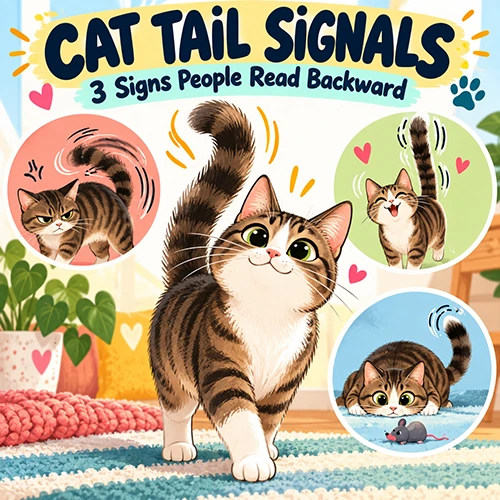
What your cat’s tail is telling you (and the three signals people read backward)
You come through the door and there it is, straight up like a periscope with a small hook at the top, moving across the hallway toward you at the speed of a cat who wants something.
Most of us read that one correctly without being taught. Then, forty minutes later, the same cat is on the couch with a tail swishing back and forth, we assume happy dog, we reach out, and we get a paw for our trouble. The signal was clear. We just applied the wrong dictionary to it.
Tails are the most legible thing about cats and the most consistently misread. Worth fixing, because the tail usually declares itself a good two or three seconds before the teeth get involved.
How the tail actually works as a signal
There is a rough rule that makes everything else easier to remember.
The base of the tail tells you intent. Up, down, or tucked, that is the headline: confident, cautious, or frightened. The tip tells you arousal, meaning how switched on your cat is at that moment, and arousal is not the same as mood. A cat can be delighted and highly aroused, which is how a friendly greeting turns into a grab.
The other thing to know is that this system is largely aimed at us and at other cats, not at the wider world. Domestic cats hold their tails upright at each other and at people constantly, and their wild relatives mostly do not. That posture appears to be something the species developed while living alongside us, which makes the raised tail one of the few pieces of cat vocabulary invented for the relationship rather than inherited.
The upright tail is the closest thing to a hello
An approaching cat with a vertical tail is signaling friendly intent, and studies of cat greeting behavior back this up plainly. Cats approach a raised tail. They hesitate at a lowered one.
The little hook at the top, the question mark shape, is the same message with a bit more enthusiasm behind it. It often means an invitation to interact, which may be play, may be food, and is occasionally just a request that you acknowledge the existence of the cat.
If you want to answer in the same language, the reply is not a stroke. It is a slow blink, which is a well documented way of returning the friendliness. Our piece on what cats say with their eyes gets into why that works.
The rest of the vocabulary
Once the base and tip rule is in your head, most of these read themselves.
- Straight up, tip relaxed. Confident, sociable, open to contact.
- Up with a question mark hook. Friendly and inviting. Something is being requested.
- Held low and level. Neutral to wary. Common in a cat working out a new situation.
- Tucked tight under the body. Fear or appeasement. This cat wants the situation to end.
- Puffed up and stiff, often with an arched back. Startled and defensive. The size increase is the whole point.
- Wrapped neatly around the body while sitting. Self-contained. Usually calm, sometimes cold, not an invitation.
- Draped over another cat, or around your ankle. Affiliative contact. This is a cat choosing you.
- Low and slowly sweeping, whole tail. Focused and possibly annoyed. Watch the ears.
None of these are absolute, and individual cats have accents. A cat with a bobtail or an old injury has a smaller vocabulary to work with, and their humans learn to read ears and posture harder to compensate.
The three signals people read backward
These are the ones worth committing to memory, because getting them wrong has consequences.
1. The thrashing tail is not a wag
This is the big one, and it comes from applying dog rules to a cat.
A dog wagging its tail is broadly saying yes. A cat swishing hard, thumping the couch, or whipping the tail side to side is saying the opposite: irritation, conflict, or a level of arousal that is about to spill over. In a cat lying on their side accepting belly rubs, that thump is the two second warning before the grab.
The tell is speed and force. Slow and loose is a cat thinking. Fast and hard is a cat done thinking.
2. The quivering upright tail is usually a greeting
A vertical tail vibrating rapidly at the tip, aimed at you as your cat trots over, is high excitement. It shows up most around feeding time and homecomings, and it is a good thing.
The confusion is that the same posture is used for urine marking. The difference is easy to spot once you know: a marking cat backs up to a vertical surface first, and the tail quiver comes with a small squirt at nose height. A greeting cat is coming toward you across open floor. Same tail, different context, completely different meaning.
3. The still tail with the twitching tip is not relaxed
A cat crouched at the window, tail flat on the floor, tip flicking. People read the stillness as calm. It is the opposite.
That is a hunting posture, and the flick is the arousal leaking out. It is also the exact state where redirected aggression happens, which is when a cat locked onto something they cannot reach, usually another cat outside the window, turns on whoever is closest. If you see that tail tip going while your cat stares out the window, that is the moment to leave them be, not to scoop them up.
Read the whole cat, not just the tail
No single body part gives you a reliable answer on its own, and the tail is the loudest voice in a small choir.
Ears rotated sideways or flattened outrank a friendly tail every time. Pupils blown wide in a bright room mean arousal or fear. Whiskers fanned forward mean interest, pinned back against the cheeks mean the cat is closing down. Weight shifted back over the hips means a cat preparing to move away from you.
When the signals disagree, believe the more defensive one. A cat with a high tail and flattened ears is not sending a mixed message. They are sending a clear one that started friendly and changed partway through, which happens constantly during petting sessions. The rest of the everyday signals get covered in our guide to why cats knead, purr, and zoom around.
What this is actually for
The practical payoff is that you stop being surprised.
Most of the bites and scratches that people describe as unprovoked were preceded by a tail doing something obvious for several seconds. Once you can see it, petting sessions end on your terms rather than the cat’s, and the relationship gets noticeably easier. It works in the other direction too. Knowing that Rosie’s tail goes up the second she hears the cupboard is a small daily pleasure that we would not have noticed a few years ago.
Cats are not subtle. They are just quiet, and they speak with the part of the body most people are not watching. If any of this is new, our recent piece on the 3am toy delivery is another behavior that makes far more sense once you know what to look for.
Loved this post? Explore more cat care tips on our cat blog, or read Cat Anxiety: Tell-Tale Behavior, Causes, and Remedies for what these signals look like when a cat is genuinely stressed.

Back-to-school transitions: the routines and toys that help an anxious cat cope
The house is loud until 7:40am. Cereal bowls, backpack panic, somebody shouting about a permission slip, the door, the car, and then nothing.
Not quiet. Empty. There is a difference, and your cat can hear it.
For a few weeks in late August the household your cat has been living in reorganizes itself completely. The people who were around all summer leave at the same time every morning, the noise level drops off a cliff, and the schedule that had been improvised since June suddenly runs like a train timetable. Some cats do not notice. Plenty of others start doing something new around the second week, and their humans do not connect it to the calendar.
Cats do get separation distress. It just wears a disguise.
The old line was that cats are solitary and do not much care who is home. That has aged poorly. Domestic cats form real attachments to the people they live with, and a share of them show measurable distress when those people go.
The reason it gets missed is that a distressed cat does not do the obvious thing. A dog paces, howls, and chews the doorframe. Cats mostly go quiet and internal, and the signal arrives as something that looks like an unrelated problem: a litter box lapse, a bald patch, a cat who stops eating until somebody comes home. Owners take those to the vet as separate complaints, which is exactly the right move, but the timing goes unmentioned.
What shows up in the first two weeks
Watch for changes rather than absolutes. A cat who has always been vocal is not telling you anything new by being vocal.
- Over-grooming. Usually the belly, inner thighs, or one flank. Thinning fur before bald skin, and it is often mistaken for allergies.
- Box trouble. Especially on a bed, a couch, or a pile of clothing belonging to the person who left. That location is not an accident.
- Food refusal while alone. The bowl sits untouched all day and gets cleared out the second the front door opens.
- Departure-side clinginess. Following you room to room during the getting-ready window, then a fixed spot by the door.
- The overwhelming reunion. Frantic greeting, sustained yowling, and a cat who will not settle for the first half hour.
- Sleeping through the day and prowling at night. A schedule flipped by a house that is now interesting only after dark.
Any one of these on its own is worth a vet conversation first, because over-grooming and box lapses both have solid medical explanations. If the exam is clean and the timing lines up with the school run, you are looking at an adjustment problem. Our piece on the signs of anxiety in cats covers the wider vocabulary.
Start the change before the change
If school has not started yet, or if you are reading this during the first week, you can still stagger it.
Practice the departure. Get dressed, pick up the keys, go out the front door, and come back in ninety seconds. Do it again an hour later. Then five minutes. Then twenty. What you are teaching is that the keys and the door do not reliably mean six hours of nothing.
Move the feeding times to where they will be during term time, and do it a few days early. Meals are the strongest anchor in a cat’s day, and shifting them is more disruptive than shifting anything else.
If summer involved a lot of daytime lap time, taper it deliberately. Going from constant company to none in one step is the version that produces the bald patch.
Make the goodbye boring and the empty house interesting
This is the part people get backward, usually out of guilt.
The ten minutes that matter most
A hard play session before you leave beats a long cuddle every time. Ten to fifteen minutes with a wand toy, ending with a catch your cat actually wins, then breakfast. Hunt, eat, groom, sleep is the natural sequence, and a cat who has run it properly at 7:30 is asleep by 8:00 instead of listening to the silence.
Give the absence a job
Do not put breakfast in a bowl on a school morning. Put it in a puzzle feeder, or split it across three or four hiding spots at different heights so the morning includes a small foraging expedition. A timed feeder that clicks open at 1pm gives the middle of the day a landmark. Rotate toys weekly rather than leaving everything out, because eight toys on the floor permanently is functionally zero toys.
Windows, height, and something to watch
A sunny window with a perch and a bird feeder outside it does more for a bored indoor cat than most things you can buy. Vertical space matters too. Cats who can get up high have more territory to patrol without more square footage. Leaving a radio or a talk podcast on low helps some cats and does nothing for others, so try it for a week and watch.
The reunion is where the good work gets undone
Everybody comes home at 3:30 and the cat gets mobbed. Two kids, a backpack on the floor, and a lot of high-pitched enthusiasm aimed at an animal who has been asleep for six hours.
Try the opposite. Come in, put things down, ignore the cat for five minutes, and let them come to you. Then run the second play session of the day, and keep it at roughly the same time. What you are building is a predictable shape to the afternoon, which is worth more to a cat than any single burst of affection.
It is also worth agreeing on some house rules with younger kids. No picking the cat up off the floor, no following them under the bed, and the cat gets to leave a room whenever the cat wants. Rosie has a spot on top of the bookshelf that everyone in our house treats as off limits, and that one rule has prevented more trouble than any product ever has.
When it is not an adjustment problem
Give the new routine two to three weeks. Most cats settle into it.
If the behavior is still there after a month, or it is escalating, ask your vet about it directly. Pheromone diffusers help some households, and for genuine separation anxiety there are medications worth discussing. Neither is a substitute for the routine work, but neither is a failure either.
Toys that carry a quiet house
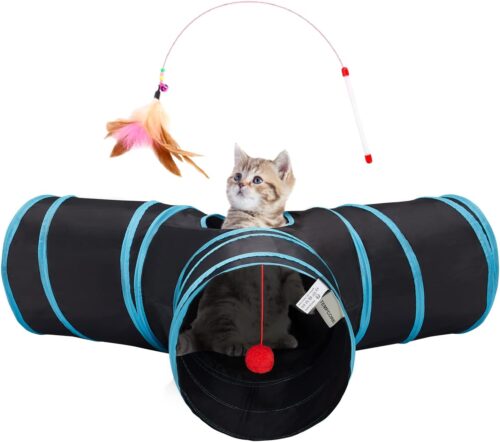
Two categories earn their keep during the school year: something that dispenses food for the empty hours, and something on a stick for the ten minutes at each end of the day. Puzzle feeders slow eating, occupy a brain, and turn one meal into a twenty minute project. Wand toys let you run a proper hunt without your hand becoming the prey.
Solo toys matter less than people think, but a small rotating set keeps the middle of the day from being featureless. Our picks for interactive cat toys covers what has held up, and the rest of the toy shelf is worth a browse if you are building out a rotation.


The whole thing comes down to one idea. Your cat is not upset that you left. Your cat is unsettled that the shape of the day changed without warning. Give the new shape some structure and most of this sorts itself out by October.
Loved this post? Explore more cat care tips on our cat blog, or read Understanding Your Cat’s Behavior for more on what the everyday signals mean.
Your turn
Leave a comment
Tried this with your own cat? Tell us how it went. We read every comment.
Keep reading
More from the Kiosk
Your cat is asleep on something important. Plenty of time for one more.

The Top-10 Must-Have Essentials for First-Time Cat Parents
Listen to the audio version of this blog post to enjoy our insights and tips on the go—perfect [...]
Meow-dieval Astrology: Which Cat Zodiac Sign Matches Your Feline Overlord?
(Spoiler: They’re All Secretly Leos) If you’ve ever stared into your cat’s eyes and thought, “Are you a Capricorn or [...]

Wet Food or Kibble for Cats? What’s the Deal?
Have you ever stood in the pet food aisle, staring at the endless options of wet food and dry [...]
Still curious?