
Halloween hazards: the candy, plants, and decor that send cats to the ER
Table of Contents
Every October, the same picture makes the rounds. A cat sitting inside a carved pumpkin, candle flickering behind it, looking either delighted or deeply betrayed. It is a great photo. It is also a fairly complete summary of what goes wrong for cats this time of year: an open flame, a rotting gourd, and an animal who will climb into anything that looks interesting.
The good news is that the list of genuine Halloween hazards for cats is short. The less good news is that it is not the list most people expect. Chocolate gets all the warnings, yet cats rarely eat enough of it to matter. Meanwhile, the bouquet on the dining table and the fake cobweb on the banister get no warnings at all.
Here is what we watch for, roughly in order of how much damage each one can do.
Lilies in fall arrangements: the quiet emergency
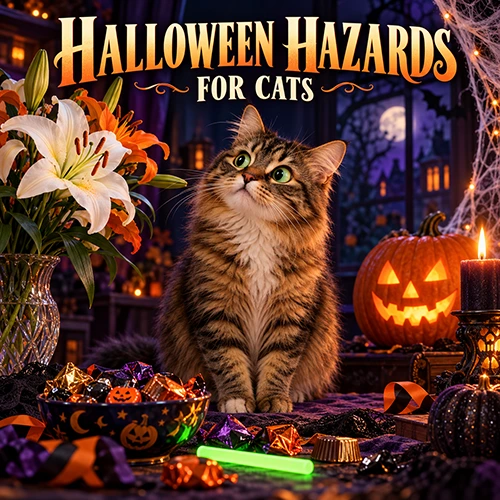
If you remember one thing from this post, make it this. True lilies (the Lilium family, which includes Easter, tiger, Asiatic, and stargazer lilies) and daylilies (Hemerocallis) can cause acute kidney failure in cats. Every part of the plant is toxic. The petals, the leaves, the pollen, and even the water in the vase.
Lilies show up constantly in autumn bouquets, harvest centerpieces, and the “thanks for having us” flowers guests bring to Halloween parties. A cat does not need to eat the flower. Brushing past it, getting pollen on the fur, and grooming it off later can be enough.
Early signs include vomiting, drooling, hiding, and not eating, usually within a few hours. Kidney damage can follow within a day or two, and by the time the obvious symptoms show, the window for the most effective treatment is closing.
Fall chrysanthemums are worth a mention too. They are much milder, usually causing drooling, vomiting, or skin irritation, but they sit on a lot of porches and steps in October. If you have a cat who goes outside or a doorway they like to sniff around, put the potted chrysanthemums somewhere out of reach.
Things that look like string
Cats are built to chase things that wiggle, and the tiny backward-facing barbs on their tongues make it hard for them to spit out anything long and thin once they start swallowing it. That is why string, ribbon, and tinsel are a classic cause of a dangerous condition called a linear foreign body, where the material bunches up the intestines as it moves through.
Halloween adds a few new versions of the same problem:
- Stretchy fake cobwebs. The polyester kind you pull apart over bushes and banisters. It is basically a giant ball of loose string.
- Costume ties and elastic. Drawstrings, ribbon bows, and the little elastic loops on masks.
- Decorative twine and raffia. Very common on hay bale and scarecrow displays.
- Curling ribbon on treat bags. Usually dropped on the floor around 8pm and forgotten.
If you ever see string hanging from your cat’s mouth or rear end, do not pull it. It may be anchored somewhere deeper, and tugging can damage the intestine. Call your vet.
The candy bowl, honestly assessed
Chocolate does contain theobromine and caffeine, both toxic to cats. Dark and baking chocolate carry far more than milk chocolate. In practice, though, most cats are not interested in sweets (they lack the taste receptors to enjoy sugar), so serious chocolate poisoning is much less common in cats than in dogs.
The bigger candy problem is usually the packaging. Foil, cellophane, and lollipop sticks can cause choking or a blockage, and a cat who would never eat a peanut butter cup will happily bat a crinkly wrapper under the couch and chew on it later. Sugar-free gum and candy are also best kept well away. Xylitol is famously dangerous for dogs; the evidence in cats is more limited, but this is not a good place to run the experiment.
Raisins, and the trail mix and cookies that contain them, belong on the high shelf too. Kidney problems from grapes and raisins are mostly documented in dogs, but poison control services still advise treating any exposure in a cat seriously.
Glow sticks, candles, and the jack-o’-lantern
Glow sticks are the hazard that causes the most panicked phone calls and the least lasting harm. The liquid inside tastes extremely bitter, so a cat who bites one usually drools, foams, and runs around looking as if the world has ended. It is distressing to watch, but the liquid is low in toxicity. Rinse the fur where it spilled, offer a little water or a bit of wet food to clear the taste, and call your vet if the drooling does not settle within a few minutes or the liquid got in an eye.
Candles are a much bigger concern. Cats walk along mantels, swish their tails over tabletops, and jump onto surfaces without checking what is there. Battery-operated tea lights inside jack-o’-lanterns cost a couple of dollars and remove the risk completely. We switched years ago, after one too many evenings watching Rosie swish her tail an inch above a candle on the windowsill like it was a personal dare.
Plain, cooked pumpkin is actually safe for cats in small amounts. A carved jack-o’-lantern is different. After a few days on the porch it starts to mold, and moldy food can make cats very sick. Toss it once it softens.
The front door is a hazard too
The single most common Halloween problem has nothing to do with eating anything. On a busy trick-or-treat night, the front door may open a hundred times. Each one is a chance for a curious or frightened cat to slip out into the dark, surrounded by noise, costumes, and more traffic than usual.
The fix is simple: on Halloween night, cats live in a closed room. We wrote a whole separate playbook on spotting and easing cat anxiety, and most of it applies here. The short version is a quiet room, familiar bedding, water, a litter box, and a door that stays shut until the doorbell stops.
If your cat spends time outside, keep them in for the week around Halloween. Our indoor and outdoor compromise guide has ideas for keeping an outdoorsy cat entertained during a stretch indoors. And whatever your setup, make sure the microchip details are current before the 31st. It takes two minutes online and it is the thing that matters most if a cat does get out.
A quick pre-Halloween sweep
Before the decorations go up, run through this list once:
None of this takes long, and none of it means skipping the fun. It just means decorating like someone who lives with an animal who will investigate every single thing you bring home.
For the colder months that follow, our winter care checklist picks up where this one leaves off, with heaters, dry air, and a few more seasonal surprises.
Loved this post? Explore more cat care tips on our cat blog, or dig into the outdoor threats people forget about for a deeper look at keeping adventurous cats safe year round.
About the Author: Milly Brown


Disclosure: This post contains affiliate links. If you purchase through these links, we may earn a commission at no extra cost to you.