What actually goes wrong when cats wear costumes: materials, fit, and the stress signals to watch
Table of Contents
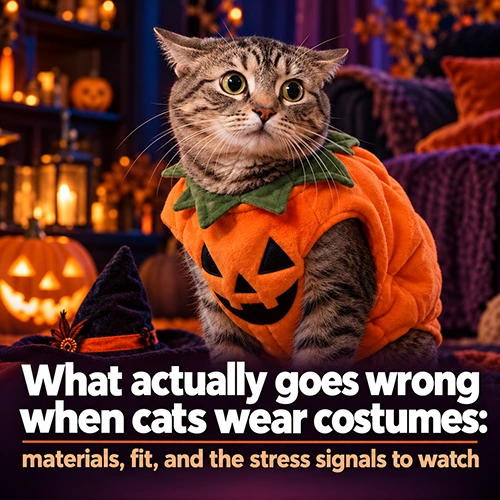
The photo always looks the same. A cat in a pumpkin suit, or a tiny witch hat, or a lion’s mane, sitting perfectly still and staring into the camera. People see that stillness and assume the cat is fine with it.
Often, the cat is not fine with it. They are frozen.
We are not here to ban cat costumes. A lot of people enjoy them, and some cats genuinely tolerate a light outfit for a quick photo. But it helps to know what actually goes wrong, why cats react the way they do, and which kinds of costumes cause the most trouble. That way, if you do dress your cat up this Halloween, you can do it in a way that is fast, safe, and as low-stress as possible.
Why cats and costumes are a bad match
Dogs have been bred for thousands of years to work closely with people, and many of them tolerate clothing well. Cats are a different story. A few things about how they are built make costumes harder for them.
- Their skin and coat are sensitive. Cats rely on touch to understand their surroundings. Fabric pressing on their back, chest, or legs is a constant, unfamiliar signal they cannot switch off.
- Their whiskers are sensors. Whiskers help cats judge space and detect movement nearby. Anything that bends or covers them, like a hood or mask, can be genuinely disorienting.
- They hate losing control of their movement. Cats move with precision. Clothing that pulls on their legs or shifts as they walk can make them feel restricted and off balance.
- Their ears are emotional signals. Hats and headbands pin down the ears, which cats use for communication. It is a bit like having someone hold your face still while you try to talk.
The freeze, the flop, and other stress signals
The most common reaction to a costume is not panic. It is stillness. Many cats freeze when they feel restrained, and in photos that freeze reads as calm. It is better understood as a cat waiting for the uncomfortable thing to be over.
Other signs your cat is not enjoying their outfit:
- Flopping onto their side and refusing to walk.
- Walking low to the ground in a crouch, or backing up.
- Ears flattened or turned sideways.
- Wide eyes with large pupils.
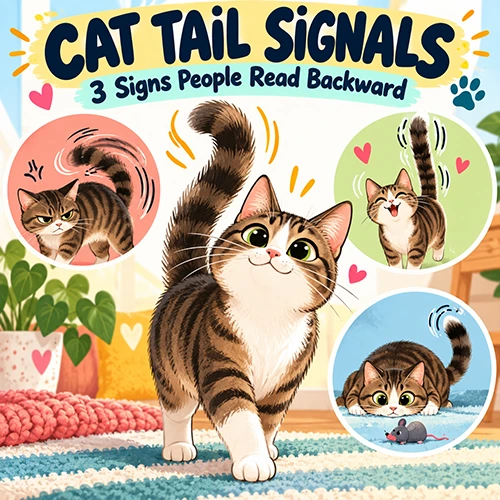
- A tail that is tucked, puffed, or thrashing. Our guide to what your cat’s tail is telling you covers the full vocabulary.
- Licking their lips, or excessive grooming once the costume is off.
- Trying to wriggle out, bite, or scratch at the outfit.
The materials that cause the most trouble
Not all costumes carry the same risk. These are the features most likely to cause problems:
Elastic around the neck or chest
Tight elastic can restrict breathing and movement, and it can rub the skin raw. If a costume relies on elastic straps to stay on, it is probably too tight for a cat. Cats are also very good at getting a leg caught in a loose strap, which can be just as dangerous.
Small parts and dangling decorations
Buttons, pom-poms, sequins, bells, and loose threads are all chewable, and many are small enough to swallow. String, ribbon, and elastic cords are especially dangerous, because cats who swallow them can end up with a serious intestinal blockage that may need surgery.
Heavy or synthetic fabrics
Cats already wear a fur coat. Thick polyester costumes and plush full-body suits can trap heat, especially in a warm house full of people. Overheating is uncommon, but it is possible, and the stress of the costume adds to it.
Anything with dye, paint, or glitter
Cats groom constantly, so anything on their fur ends up in their mouth. Never use face paint, hair dye, colored spray, or glitter on a cat. Even products labeled “pet-safe” are usually designed for dogs.
Fit: how to tell if a costume is safe
If you are going to try a costume, the fit matters more than the design. A good fit for a cat looks like this:
If a costume fails any of these, skip it. A simple outfit that fits well is safer than an elaborate one that almost does.
Some cats really do not mind
To be fair to the costume fans, there are cats who handle a light outfit well. They tend to be the ones who were handled a lot as kittens, who already wear a harness for walks, or who are simply laid back about everything. If your cat walks, plays, and eats normally with a costume on, keeps their ears in a relaxed position, and does not try to remove it, a short session is probably fine.
Even then, the same rules apply. Keep it light, keep it brief, and stay close. Tolerance on Tuesday is not a guarantee on Saturday, especially with a doorbell going.
How to do a costume photo the low-stress way
If your cat seems reasonably relaxed about being handled, a quick photo can be done safely. Keep it short and on their terms.
Start by letting your cat sniff and investigate the costume on the floor for a day or two before you put it on. Have treats ready and a second person to take the photo. Put the outfit on, take a few shots quickly, then take it off. Aim for under a minute or two. Do not try for the perfect picture. Take what you get.
Rosie made her opinion on this extremely clear years ago. We tried a small bat-wing harness, she flopped onto her side like a fainting goat, and that was the end of her costume career. She has since been allowed to supervise the decorating from a safe distance, which suits everyone.
Costume ideas that skip the cat entirely
The best costume for most cats is no costume at all. If you still want a themed photo, there are other ways to get it:
- Dress the space. Put your cat’s bed in a cardboard “haunted house” or decorate their favorite box with paper bats.
- Use a photo prop. A small witch hat placed next to the cat, rather than on them, often gets the same laugh.
- Edit it in. Plenty of phone apps add costumes to a photo after the fact. Your cat will never know.
- Match your cat instead. Dress yourself up. Our cat-themed tees are a lot easier to wear than a pumpkin suit is for a cat.
If your cat is the anxious type, Halloween night has plenty of other stressors to manage. Our guide to recognizing cat anxiety will help you read the signs, whether or not a costume is involved.
Loved this post? Explore more cat care tips on our cat blog, or dig into Understanding Your Cat’s Behavior for a deeper look at the instincts behind how cats react to the world.
About the Author: Milly Brown


Disclosure: This post contains affiliate links. If you purchase through these links, we may earn a commission at no extra cost to you.