
Litter box avoidance: when it’s medical, when it’s the box, and the order to check
Table of Contents
The towel goes down first. Then the enzyme cleaner, then a second towel, then a small quiet moment on the bathroom floor where you sit back on your heels and wonder what you did to deserve this.
Every cat parent gets that morning eventually. A puddle on the bathmat, a damp patch at the foot of the comforter, or the clean laundry basket, which for reasons nobody has explained is the most popular alternative bathroom in America.
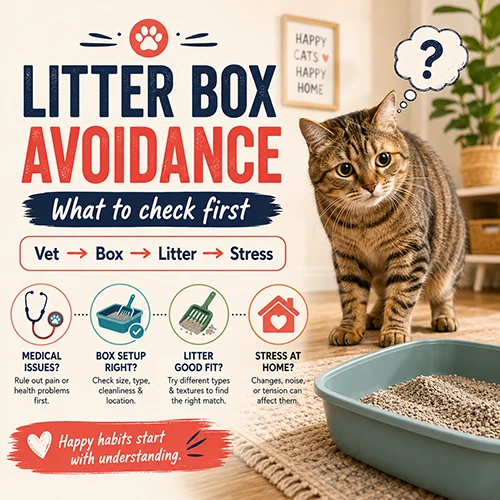
The instinct is to take it personally. Try not to. Cats do not run revenge campaigns, and yours is not making a statement about your new work schedule. What they are doing is voting with their bladder, and that vote is almost always about one of five things: pain, the box, the litter, the cleaning, or the social weather in the house. The trick is checking those five in the right order instead of the convenient one.
Start with the vet. Every single time.
This is the step people skip, and it is the step that matters most.
A cat who suddenly stops using the box has a decent chance of something physical going on, and none of it is visible from across the room. Urinary tract inflammation, crystals, bladder stones, kidney disease, diabetes, hyperthyroidism, arthritis. Every one of those can turn a reliable cat into an unreliable one in about a week.
Two of those get missed constantly.
The first is feline idiopathic cystitis, a stress-linked bladder inflammation that produces real pain with no infection to find. Cats with it associate the box with the burning, then avoid the box, and their humans conclude the cat is being difficult. The cat is not being difficult. The cat is trying not to hurt.
The second is arthritis in older cats. A senior with sore hips looks at a box with an eight inch wall the way you would look at a fence, and the litter surface itself can be uncomfortable to stand on. Nothing about that shows up as limping. It shows up as a puddle next to the box instead of in it, which is one of the most telling patterns there is. If your cat is over ten, our notes on caring for an aging cat cover the other quiet changes that arrive around the same time.
Ask for a urinalysis, not just a physical exam. A cat can look magnificent and still have a bladder full of crystals.
If the workup is clean, look at the box before anything else
Once a vet has cleared your cat, you are troubleshooting equipment. This part is unglamorous and it is where most cases actually get solved.
The box is almost certainly too small
The working rule is that a box should be about one and a half times the length of your cat, measured nose to the base of the tail. Hold that up against what is sold in pet stores and the math gets uncomfortable fast. A 12 pound cat in a standard rectangular pan is doing a three point turn every time.
The cheapest fix in this article is a plain plastic storage tote. A 30 quart under-bed model runs about $12 and is bigger than nearly anything marketed as a litter box. Cut a low entry on one side for shorter legs, or leave it tall if your cat is a kicker.
Count and location
The standard guidance is one box per cat plus one. That extra box is not generosity, it is insurance against a bad day.
Placement matters as much as the number. Three boxes lined up in one laundry room is a single box as far as your cat is concerned, because one blocked doorway takes out all three. Spread them across floors and rooms, away from the washer, which fires off a spin cycle at exactly the wrong moment, and out of dead-end corners where a cat can be trapped by a housemate or a robot vacuum.
Hoods, liners, and swinging doors
Covered boxes are built for human noses. Inside, they concentrate odor and cut off the sight lines a cat wants while vulnerable. Liners snag claws. Swinging flaps need slow introduction and are frequently the whole problem.
Automatic boxes are genuinely great for some households and a dealbreaker for others, and the deciding factor is usually noise. A cat startled once by a raking cycle can write off the machine permanently. If you are weighing one up, our rundown of self-cleaning litter boxes goes through which mechanisms are quiet and which are not.
Litter: the variable people change last and should change second
Cats have opinions about what they stand on, and those opinions were mostly formed as kittens.
The safe default is unscented, fine-grained, clumping clay at a depth of two to three inches. That texture is closest to the sandy soil the species evolved to dig in. Scented litter is a product designed for the person carrying the bag to the register. Your cat is standing in a cloud of it with a nose vastly better than yours.
Depth matters more than people expect. Too shallow and there is nothing to dig. Too deep and it feels unstable underfoot, which older cats dislike.
If you changed brands recently, change back. That single move solves a surprising number of cases outright. Rosie went on strike for four days over a switch to a lavender-scented formula, and the strike ended the afternoon the old bag came back.
What your cat smells that you do not
Scoop twice a day. That is the whole trick, and it is the one nobody wants to hear.
A cat’s sense of smell is far sharper than ours, so a box that reads as acceptable to you can read as thoroughly used to them. Beyond scooping, dump and wash a clumping box every few weeks with plain unscented dish soap and hot water. Skip bleach, and skip anything ammonia-based, because ammonia smells like urine and effectively signposts the spot as an approved bathroom.
Plastic scratches with age, and those scratches hold odor no amount of washing will lift. If a box is a couple of years old and looks scuffed, replace it. It is a $15 experiment.
For accidents on the floor or furniture, only an enzyme cleaner breaks down the compounds. Regular household cleaner masks the smell for you and leaves the marker in place for your cat. A cheap blacklight in a dark room shows you every old spot you missed, which is either useful or upsetting, depending on the house.
The social weather
When the medical, the box, and the litter all check out, look at the household.
Cats are territorial in a way that is easy to miss, because it is enforced so quietly. One cat parking in a hallway can close a room to another. A new baby, a new dog, a houseguest, or a strange cat sitting outside the window at 4am all shift the balance. That last one produces the most confusing cases going, because the trigger is outside and the puddle is inside.
Extra vertical space, more escape routes, and separated resources do more here than any product will. If tension is new, our guide to introducing cats to each other has the slow version of the process that most households rush.
Marking and avoidance are different problems
Worth learning the difference, because the fixes barely overlap.
Marking is a message. The cat stands, backs up to a vertical surface, quivers the tail, and deposits a small amount at nose height. Crucially, a marking cat usually still uses the box for everything else.
Avoidance is plumbing. The cat squats, on a horizontal surface, and empties the bladder properly. That is a cat telling you the facility is unacceptable or painful.
Marking responds to territory and stress work, plus neutering if that has not happened. Avoidance responds to the checklist above.
The order to work through it
Give each change a week, and keep a note on your phone of what you changed and when. That note is worth more at the follow-up appointment than any description of how the cat has been acting.Gear that helps once you know the cause
Equipment is the last step, not the first, and it only pays off after the diagnosis. A large open pan solves more cases than any gadget. Beyond that, a quiet automatic box helps households where scooping twice a day is not realistically happening, and a wide low-entry pan helps arthritic seniors. Have a look through our litter boxes and accessories once you know what you are actually solving for.


One last thing. Cats who lose the box rarely lose it for a single reason. It is usually a mild medical issue, plus a box that was always slightly too small, plus a litter change that landed the same month. Work through them one at a time and the picture clears faster than you would think.
Loved this post? Explore more cat care tips on our cat blog, or read Hydration Heroes for the water-intake side of urinary health.
About the Author: Milly Brown


Disclosure: This post contains affiliate links. If you purchase through these links, we may earn a commission at no extra cost to you.