
6 Best-Selling Catios: Give Your Cat the Outdoor Experience They Crave

If you’ve ever caught your indoor cat staring longingly out the window, you know that look. Our feline friends have an innate curiosity about the outside world, but as responsible pet parents, we understand the risks of letting them roam freely. That’s where catios come in! These cat patios have exploded in popularity, and for good reason – they offer the perfect balance of freedom and safety.
We’ve compiled six best-selling catios, based on quality, features, and functionality. Whether you have multiple cats or limited space, there’s a perfect option waiting for you and your furbaby.
Why Every Cat Parent Should Consider a Catio
Before we dive into the reviews, let’s talk about why catios have become such a hit with cat owners. According to veterinary technician Jessica Sewell, catios provide “a safe and easy way to give a cat more territory and provide stimulation, and can help reduce conflicts and behavioral problems with other pets in the household.”
The benefits of catios include:
- Reduced stress and anxiety
- Decreased boredom-related destructive behaviors
- Improved mood and playfulness
- More physical activity
- Access to fresh air and natural enrichment
Ready to find the perfect outdoor haven for your feline friend? Here are our top six picks.
1. Aivituvin Catio Outdoor Cat Enclosure
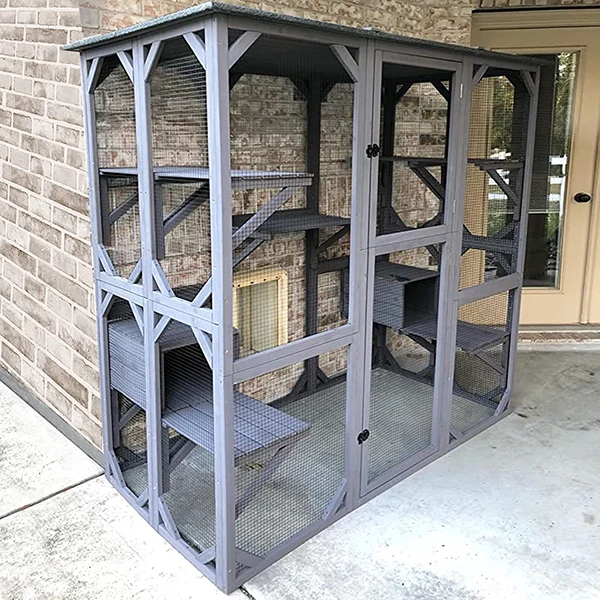
Price: Check current price on Amazon
The Aivituvin Catio Outdoor Cat Enclosure has earned its spot at the top of our list through an impressive combination of quality construction and thoughtful design features. This catio stands out as a favorite among cat owners who want a durable, versatile solution for their furry friends.
What Makes It Special:
- Made of solid fir wood with a waterproof asphalt roof
- Includes multiple platforms for climbing and resting
- Spacious enough for 2-3 cats with separate areas for play and relaxation
- Equipped with wheels for portability and brake casters for stability
- Easy to clean with a removable PVC bottom layer
This durable outdoor catio provides a safe and spacious environment for cats to enjoy the outdoors while being protected from predators. Its multi-level design encourages climbing and play, making it ideal for active cats.
2. 71-Inch Outdoor Cat Enclosure
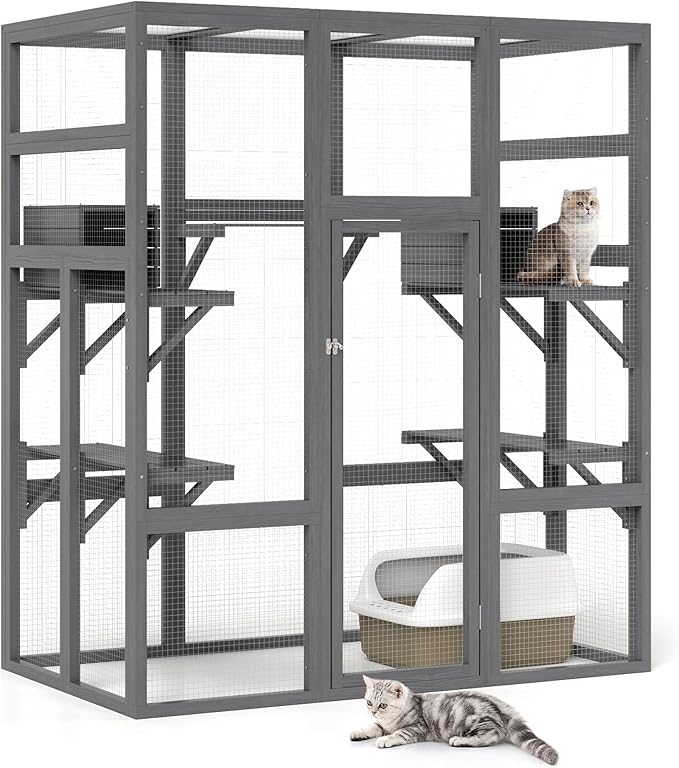
Price: Check current price on Amazon
If you’re looking for something you can actually walk into, this 71-inch outdoor enclosure is an excellent option. It’s essentially a cat paradise that you can step inside to interact with your feline friends.
What Makes It Special:
- Walk-in design with a 64-inch tall access door for easy interaction with cats
- Includes 5 platforms and 2 resting rooms for climbing, jumping, and lounging
- Made of solid fir wood with eco-friendly waterproof paint and a roof tarp
This large outdoor enclosure provides ample space for cats to climb, jump, and relax in a secure environment. Its walk-in design makes it convenient for owners to interact with their pets or clean the space.
The walk-in feature is a practical addition for many cat parents. The generous height gives cats plenty of vertical territory to explore, satisfying their natural instinct to climb and perch at different heights.
3. Aivituvin AIR22-M Medium Wooden Outdoor Cat Catio

Price: Check current price on Amazon
Not everyone has a sprawling backyard, and that’s exactly why the Aivituvin AIR22-M has become such a hot seller. This compact catio proves that effective solutions come in all sizes.
What Makes It Special:
- Compact design suitable for small backyards or balconies
- Equipped with wheels for easy movement and portability
- Made of durable fir wood with weatherproof coating
Perfect for small spaces, this medium-sized catio provides a secure outdoor experience for your feline friends while being easy to move around.
Despite its smaller footprint, this catio doesn’t skimp on quality. The durable construction and weatherproof coating mean it can stand up to the elements, while the wheels make it easy to reposition as needed. It’s an ideal choice for apartment dwellers with balconies or those with limited yard space.
4. FunXplore Outdoor Cat Enclosure
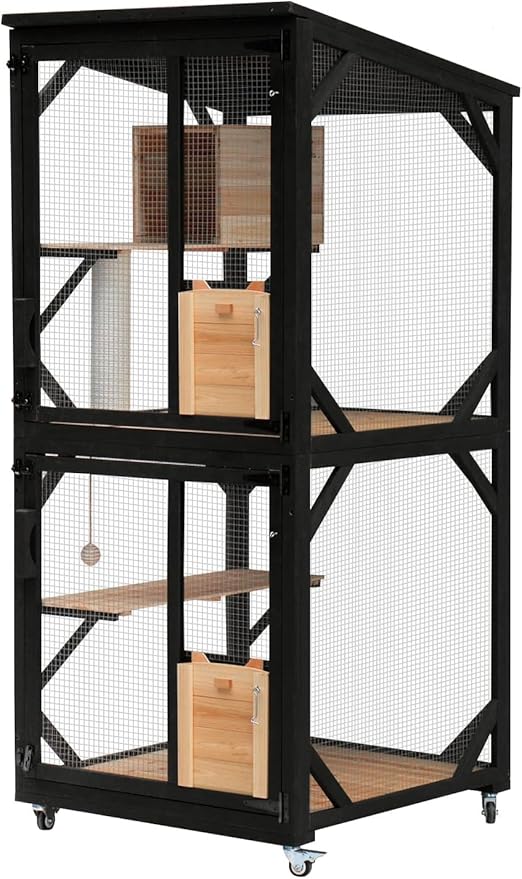
Price: Check current price on Amazon
If you’ve got multiple cats with different needs, the FunXplore enclosure deserves serious consideration. Its customizable features make it a versatile option that can adapt to various preferences.
What Makes It Special:
- Weatherproof design with removable scratching posts and platforms
- Spacious enough to accommodate multiple cats comfortably
This versatile enclosure offers cats a safe outdoor play area with customizable features like removable scratching posts, making it ideal for multi-cat households.
The removable elements are what truly set this catio apart. The ability to rearrange scratching posts and platforms creates a more engaging setup. This adaptability makes the FunXplore a smart investment that can be reconfigured based on observation of your cats’ usage patterns.
5. Aivituvin Outdoor Enclosure Playpen
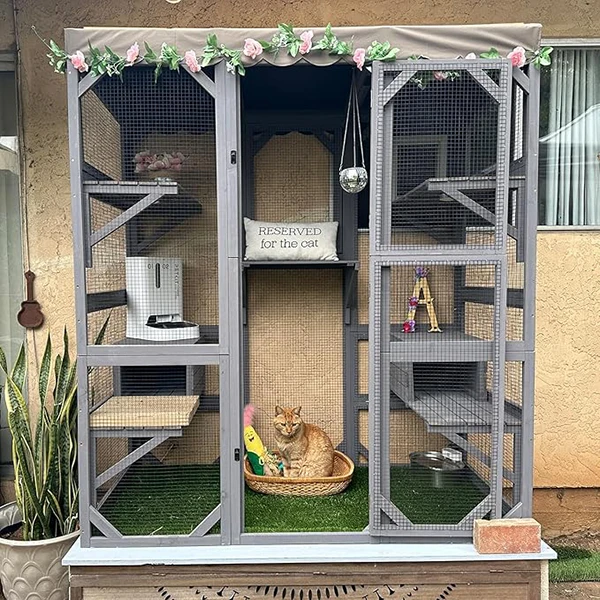
Price: Check current price on Amazon
The playpen design of this Aivituvin model has made it a consistent best-seller among cat parents who want to provide enrichment while maintaining a sleek, attractive addition to their outdoor space.
What Makes It Special:
- Multi-level playpen design with platforms and a resting house inside
- Durable wood construction with weather-resistant finish
This playpen-style catio is designed to provide enrichment through climbing and lounging while keeping cats safe in an outdoor environment.
The inclusion of a resting house inside the playpen gives cats options – they can enjoy the platforms or retreat to a more sheltered area. The thoughtful design encourages natural behaviors while providing protection from the elements and potential predators.
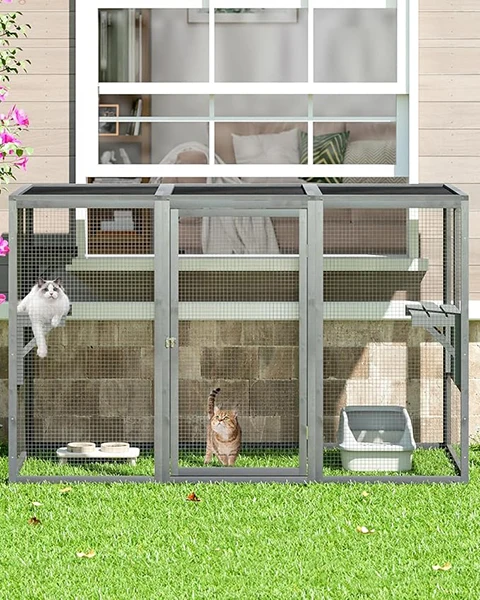
6. Outdoor Enclosure with Weatherproof Platforms
Price: Check current price on Amazon
Rounding out our list is a premium option designed for true all-season use. This robust enclosure stands up to various weather conditions.
What Makes It Special:
- Multiple weatherproof platforms designed for climbing and lounging
- Durable construction made to withstand outdoor elements year-round
This spacious enclosure offers cats a secure place to enjoy fresh air, complete with weatherproof features that make it suitable for all seasons.
If you live somewhere with dramatic weather changes throughout the year, this catio is worth the investment. The weatherproof platforms resist warping, cracking, and fading, while the durable construction ensures stability even in windy conditions. Your cats can enjoy outdoor time across multiple seasons without concerns about damage to their enclosure.
Quick Comparison: Finding Your Perfect Catio
To help you compare these top sellers at a glance, here’s a handy reference table:
| Catio | Best For | Standout Feature |
|---|---|---|
| Aivituvin Catio Outdoor | Active cats | Multiple platforms with portable design |
| 71-Inch Outdoor Enclosure | Maximum interaction | Walk-in design with 64″ door |
| Aivituvin AIR22-M | Small spaces | Compact with wheels for mobility |
| FunXplore Outdoor | Multi-cat households | Customizable with removable features |
| Aivituvin Outdoor Playpen | Enrichment-focused | Multi-level with integrated resting house |
| Weatherproof Platforms Enclosure | All-season use | Weather-resistant materials throughout |
How to Choose the Right Catio for Your Feline Friend
With so many great options, how do you pick the perfect catio? Here are some key factors to consider:
Space Considerations
First, evaluate your available space:
- Measure carefully – Ensure you have adequate room for the catio dimensions
- Consider placement – Will it be on grass, concrete, a deck, or a balcony?
- Think about accessibility – How will you need to access it for cleaning and interaction?
For tight spaces, the Aivituvin AIR22-M is particularly suitable, while those with more room might prefer the walk-in 71-inch enclosure.
Your Cat’s Personality and Needs
Different cats have different requirements:
- Highly active climbers will appreciate multi-level options with plenty of platforms
- Older or less mobile cats might need lower platforms with easier access
- Multiple cats require enough space to prevent territorial issues
The FunXplore’s customizable features make it effective for accommodating various needs in multi-cat homes.
Weather Considerations
Think about your local climate:
- Rainy regions need solid, waterproof roofing
- Snowy areas require durability and perhaps seasonal storage
- Hot, sunny locations benefit from options that provide adequate shade
The Weatherproof Platforms Enclosure is specifically designed to handle diverse weather conditions year-round.
Making the Most of Your New Catio
Once you’ve selected and set up your catio, here are some tips to make it a truly enriching space for your feline friend:
- Add cat-safe plants like cat grass, catnip, or cat thyme for sensory stimulation
- Incorporate different textures such as sisal, carpet scraps, and smooth woods
- Create hiding spots with small boxes or fabric tunnels
- Rotate toys regularly to keep the space interesting and engaging
- Consider a bird feeder nearby (but not too close!) for feline entertainment
Remember that a catio is an extension of your cat’s territory, so make it a place they’ll truly enjoy.
Final Thoughts: A Worthwhile Investment in Your Cat’s Happiness
After reviewing these six exceptional options, the original Aivituvin Catio Outdoor Cat Enclosure stands out as the best overall choice for most cat owners. Its combination of quality construction, thoughtful design features, and reasonable price point makes it an excellent investment.
Whichever model you choose, introducing a catio to your home environment represents a significant enhancement to your cat’s quality of life. You’re addressing fundamental feline needs for environmental stimulation while maintaining the safety benefits of indoor living—truly the best of both worlds.
Have questions about which might work best for your situation? Drop a comment below! We’d love to help you find the perfect outdoor sanctuary for your furry friend.
Remember: Always supervise your cat during their first few experiences in their new catio to ensure they’re comfortable and the structure is secure. 🐾
Loved this post? Explore more helpful cat care tips on our cat blog and join our community of cat lovers to share stories and advice!
About the Author: Milly Brown

A quick heads up
Some links in our posts are affiliate links. If you buy through one, we may earn a small commission at no extra cost to you. How it works
Shop the aisles
Hand-picked, well-reviewed gear for every kind of cat.
How old is your cat in human years?
Our free calculator works it out in seconds. No math, no judgment.
Fresh off the blog

Ragdoll Cats: Gentle Giants with Heart-Melting Charm
Have you ever dreamed of a cat that would greet you at the door, follow you from room to room, and melt into your arms when picked up? Meet the Ragdoll – a striking breed known for its large size, striking blue eyes, and remarkably affectionate nature. With their semi-longhaired colorpoint coats, docile personalities, and tendency to go limp when held, Ragdolls have won the hearts of cat lovers looking for a companion that offers the perfect balance of beauty and sweetness.
Ragdoll,The Origin Story: From California to Worldwide Recognition
The Ragdoll breed has a well-documented beginning in Riverside, California in the 1960s. The breed’s development started with Ann Baker, who was a Persian cat breeder at the time.
The foundation cat of the breed was a white domestic longhaired cat named Josephine, who was a semi-feral cat living on a neighbor’s property. Baker selected kittens from Josephine’s litters that showed the desirable traits she was looking for, particularly their docile temperament and distinctive appearance.
The early foundation cats included Josephine’s offspring: a black cat named Blackie, a male named Daddy Warbucks, and females named Buckwheat and Fugianna. Through selective breeding, Baker developed the distinctive characteristics that define today’s Ragdolls.
In an unusual move for the cat fancy world, Baker trademarked the name “Ragdoll” and created her own registry, the International Ragdoll Cat Association (IRCA) in the early 1970s. She maintained strict control over breeding rights. In 1975, a couple named Denny and Laura Dayton broke away from Baker’s organization to gain mainstream recognition for the breed, which eventually led to recognition by major cat registries.
The Cat Fanciers’ Association granted the Ragdoll championship status in 2000, and today Ragdolls are consistently among the most popular cat breeds worldwide.
Those Stunning Coats: Silky Perfection
The Ragdoll’s coat is one of its most distinctive and appealing features – silky, semi-long, and requiring surprisingly little maintenance.
Colorpoint Magic
Ragdolls are a “pointed breed,” meaning their bodies are lighter in color while their faces, ears, legs, and tails display deeper coloration. According to The Spruce Pets, “Their coats begin to develop colors and patterns around two months of age but don’t fully develop their coloration for about two years.” This temperature-sensitive pattern is similar to Siamese coloring.
Pattern Variations
The Cat Fanciers’ Association recognizes Ragdolls in three distinct patterns:
Colorpoint: The classic look with a pale body and darker points without white markings.
Mitted: Similar to colorpoint, but with white “mittens” on the paws, a white chin, and often a white stripe running down the belly.
Bicolor: Features an inverted “V” of white on the face (called a blaze), white legs, white abdomen, and sometimes white on the back.
The Development of Color
Ragdoll kittens are born completely white. As noted by FELIWAY, “When Ragdoll kittens are born, they are pure white and develop their coat colour and pattern over the first 2 weeks of their life.” Their coloration continues to develop over time, with full color maturity often not reached until they are several years old.
The breed comes in several color varieties, with the original colors being:
- Seal (dark brown points)
- Blue (gray-blue points)
- Chocolate (lighter brown points)
- Lilac (pale gray with pinkish tone points)
According to the Ragtastic Cattery, “Red, tortie, and lynx marked Ragdolls were introduced by breeders by outcrossing with another breed to introduce the colours and patterns” and are now accepted by all cat associations for championship.
Built for Cuddles: The Ragdoll Body Type
According to Wikipedia, “The Ragdoll is a breed of cat with a distinct colorpoint coat and blue eyes. Its morphology is large and weighty, and it has a semi-long and silky soft coat.”
Ragdolls are substantial cats with distinctive physical characteristics:
- Size: “Fully-grown females weigh from 8 to 15 pounds (3.6 to 6.8 kg). Males are substantially larger, ranging from 12 to 20 pounds (5.4 to 9.1 kg) or more,” as noted by Wikipedia.
- Development: The Cat Fanciers’ Association explains that “Ragdolls are slow maturing, reaching full coat and color at about three years of age.” According to Trupanion, “It can take up to four years for a Ragdoll to reach mature size.”
- Body structure: The CFA describes them as having “a broad chest, long, muscular body and sturdy boning to match.”
- Coat: “Their semi-long fur lacks the dense undercoat of many longhaired breeds,” according to the CFA, which makes it “silky, semi-long, and requiring surprisingly little maintenance.”
- Eyes: According to multiple sources, Ragdolls always have blue eyes, regardless of coat color.
- Feet: FELIWAY notes that “Ragdolls have tufts of hair between their toes – like other long hair cats, this is to protect them from direct contact with wet and icy ground.”
What makes Ragdolls particularly special is their combination of substantial size with an elegant appearance and graceful movement.
Personality Plus: What It’s Like to Live With a Ragdoll
If you’re considering adding a Ragdoll to your family, prepare yourself for a cat that defies many typical feline stereotypes. These cats bring a unique blend of personality traits that make them exceptional companions.
Gentle Temperament
Perhaps the most defining characteristic of Ragdolls is their exceptionally gentle, placid nature. These cats rarely extend their claws during play and seem to understand their own size and strength. This makes them excellent pets for households with children, elderly people, or other pets.
Their easygoing temperament means they typically:
- Tolerate being dressed up by children
- Accept handling more readily than many breeds
- Rarely show aggression, even when provoked
- Adapt well to household changes
Puppy-Like Devotion
Ragdolls are often described as “dog-like” in their attachment to their humans. They’ll:
- Greet you at the door when you come home
- Follow you from room to room
- Come when called (often!)
- Enjoy learning tricks and playing fetch
- Want to be wherever you are, doing whatever you’re doing
This devoted nature means they form extremely strong bonds with their families and truly thrive on human interaction.
The Famous Flop
The breed gets its name from the tendency of many Ragdolls to relax when being held. As Wikipedia explains, “The name Ragdoll is derived from the tendency of individuals from the original breeding stock to go limp and relaxed when picked up.” This relaxed trait is something breeders have maintained over the years, making them particularly easy to handle compared to many other breeds.
According to The Cat Fanciers’ Association, “Baker claimed that Josephine was so placid that she went limp when held. While this characteristic is not typical of most of today’s Ragdolls, it did give rise to the name of the breed.” So while not every Ragdoll will completely flop, many do exhibit this relaxed temperament when held.
Quiet Communicators
Ragdolls aren’t known for being vocal cats. They typically have soft, musical voices that they use sparingly. Instead of demanding attention through meowing, they’re more likely to simply appear beside you, gazing up with those stunning blue eyes until you give them the attention they seek.
When they do vocalize, it’s often in the form of quiet chirps, trills, or soft meows rather than the insistent yowling some breeds are known for.
Family-Oriented Companions
Ragdolls thrive on company and don’t do well when left alone for long periods. They:
- Bond with the entire family rather than just one person
- Generally get along well with children and other pets
- Prefer peaceful environments over chaotic ones
- Are more likely to walk away from conflict than engage in it
Their sociable nature makes them poor candidates for homes where they’ll be alone for extended periods, but excellent additions to active family households.
Ragdoll Characteristics Compared to Other Popular Cat Breeds
| Characteristic | Ragdoll | Maine Coon | Persian | Siamese | British Shorthair |
|---|---|---|---|---|---|
| Temperament | Extremely placid, docile, and affectionate; often called “puppy cats” for their dog-like behavior | Friendly and social but more independent; playful into adulthood | Sweet and gentle; quieter and less active; enjoys a peaceful environment | Vocal, demanding, and highly intelligent; forms strong bonds with specific people | Reserved, calm, and undemanding; affectionate but not clingy |
| Activity Level | Moderate; enjoys gentle play but not very athletic | Moderate to high; loves interactive play and climbing | Low; prefers lounging to playing | High; needs mental and physical stimulation | Low to moderate; enjoys short play sessions |
| Sociability | Extremely social; follows owners around; dislikes being alone | Social and friendly with family and visitors | Selective with affection; bonded mainly with family | Very attached to their people; can be standoffish with strangers | Independent but enjoys company; not typically lap cats |
| Vocalization | Quiet; soft chirps and trills when communicating | Moderate; chirps and trills rather than meows | Quiet; gentle, musical voice used sparingly | Very vocal; loud, demanding conversations | Quiet; communicates with subtle sounds |
| Size | Large; males 12-20 lbs, females 8-15 lbs | Very large; males 15-25 lbs, females 10-15 lbs | Medium; males 9-14 lbs, females 7-11 lbs | Medium; males 8-12 lbs, females 5-8 lbs | Medium to large; males 9-17 lbs, females 7-12 lbs |
| Grooming Needs | Moderate; semi-long coat without dense undercoat; weekly brushing | High; thick double coat requires frequent grooming | Very high; dense, long coat prone to matting; daily grooming | Low; short coat with minimal shedding | Moderate; dense coat needs weekly brushing, seasonal heavy shedding |
| Child/Pet Friendly | Excellent with children and other pets; very patient | Very good with children and other pets; gentle despite size | Can be good with gentle children; may be wary of other pets | Better with older children; can be territorial with other cats | Good with respectful children; typically tolerant of other pets |
| Intelligence/Trainability | Intelligent and trainable; can learn tricks and fetch | Very intelligent; problem solvers and easily trained | Less interested in training; more focused on comfort | Highly intelligent; quick learners; need mental stimulation | Moderately intelligent; can learn but may not be motivated |
| Health Considerations | HCM (heart), PKD (kidney); generally healthy with 12-17 year lifespan | HCM, hip dysplasia; robust with 12-15 year lifespan | Breathing issues, PKD, eye problems; 10-15 year lifespan | Respiratory issues, dental disease; 11-15 year lifespan | HCM, obesity prone; generally healthy with 12-20 year lifespan |
| Coat Colors & Patterns | Colorpoint, mitted, or bicolor in seal, blue, chocolate, lilac, red, cream, and tortie variations; born white with colors developing over time; always blue eyes | Wide variety including tabby, solid, tortie, and calico; over 75 color combinations; eye colors vary | Multiple solid colors, tabby, bicolor, calico, smoke, and shaded variations; eye colors vary based on coat color | Classic colorpoint pattern; seal, blue, chocolate, lilac, red, cream, and tortie points; always blue eyes | Over 30 colors including classic blue, solid, tabby, colorpoint, and bicolor; most common is British Blue; eye colors vary |
| Distinctive Traits | Goes limp when held; striking blue eyes; moderate dependency | Tufted ears; bushy tail; dog-like personality with independence | Flat face; luxurious coat; quiet elegance | Striking blue eyes; angular face; bold personality | Round face; dense plush coat; reserved dignity |
Note: Individual cats within each breed will have their own unique personalities. This table reflects general breed tendencies based on recognized breed standards.
Caring for Your Ragdoll: What They Need to Thrive
Grooming Those Gorgeous Coats
Despite their semi-long fur, Ragdolls are surprisingly low-maintenance in the grooming department:
- The silky coat lacks the dense undercoat of many longhaired breeds, reducing matting
- Weekly brushing with a stainless steel comb is usually sufficient
- More frequent brushing during seasonal shedding helps manage loose fur
- Occasional baths (every few months) help keep the coat pristine
Other routine care includes:
- Regular nail trimming (usually accepted easily thanks to their gentle nature)
- Periodic ear cleaning if wax builds up
- Dental care through brushing or dental treats
Diet: Nourishing Your Gentle Giant
Ragdolls are large cats with moderate activity levels who need proper nutrition to maintain optimal health without becoming overweight:
- High-quality, protein-rich food appropriate for their life stage
- Portion control to prevent obesity, especially as they mature and become less active
- Fresh water available at all times (many enjoy drinking from running faucets or fountains)
- Careful treat management to avoid unwanted weight gain
Some Ragdoll owners report their cats prefer wet food over dry, which can be beneficial for hydration and urinary health.
Exercise: Finding the Right Balance
While not as high-energy as some breeds, Ragdolls do need regular play and exercise to stay healthy:
- Interactive toys that encourage gentle play
- Puzzle feeders to engage their minds
- Cat trees for climbing and perching (though they’re not as vertical-oriented as some breeds)
- Gentle play sessions with wand toys or soft balls
Ragdolls typically enjoy moderate play sessions rather than wild acrobatics, and many will continue to play well into adulthood, though usually in a gentler fashion than more athletic breeds.
Health Watch: Keeping Your Ragdoll in Top Form
According to FELIWAY, Ragdolls have “a life expectancy up to 15 years” and while they are generally healthy cats, they do have some health considerations to be aware of.
The most significant health concern in Ragdolls is Hypertrophic Cardiomyopathy (HCM). Purina UK explains this as “a disease where the heart muscle becomes abnormally thick which means the heart cannot beat effectively.” According to Trupanion, “Around 30% of Ragdolls are estimated to carry the genes for this condition.”
Another condition to be aware of is Polycystic Kidney Disease (PKD). Purina UK describes this as “an inherited condition where cysts form in the kidneys. This affects kidney function and can eventually lead to kidney failure.” They note that “the risk of developing this disease in this breed is lower than in other cat breeds that are prone to the problem.”
The Cat Fanciers’ Association notes that “because of their diverse genetic background, they are relatively healthy,” and that breeders “now routinely test for [HCM] and are working to remove carrier cats from the gene pool.”
When acquiring a Ragdoll kitten, it’s advisable to ask the breeder about testing for these conditions and request health clearances for the parents.
🐱 Are You Ready for a Ragdoll Cat? 🐱Take this quick quiz to see if a Ragdoll might be right for your home!
Based on your answers, a Ragdoll cat would be an excellent match for your lifestyle and preferences! Your desire for an affectionate companion, availability at home, willingness to groom, preference for gentle play, and social household all align perfectly with what Ragdolls need and offer. '; } else if (score >= 8) { resultTitle.innerHTML = '😺 A Ragdoll Could Work For You With Some Adjustments 😺'; resultContent.innerHTML = 'You might enjoy a Ragdoll, but there are a few aspects of your lifestyle that might need some adjustment. Consider how you might arrange for company if you\'re away from home often, or whether you\'re willing to commit to regular grooming. '; } else { resultTitle.innerHTML = '🐱 A Different Cat Breed Might Suit You Better 🐱'; resultContent.innerHTML = 'Based on your preferences, a different cat breed might be a better match for your lifestyle. You might want to consider more independent breeds like the Russian Blue, American Shorthair, or perhaps a Maine Coon if you still want a larger cat with a bit more independence. '; } document.getElementById('quiz-results').style.display = 'block'; document.getElementById('quiz-results').scrollIntoView({behavior: 'smooth'}); }function resetRagdollQuiz() { // Clear all selections for (var i = 1; i <= 5; i++) { var radios = document.getElementsByName('q' + i); for (var j = 0; j < radios.length; j++) { radios[j].checked = false; } } // Hide results document.getElementById('quiz-results').style.display = 'none'; document.getElementById('ragdoll-quiz').scrollIntoView({behavior: 'smooth'}); } |
Finding Your Ragdoll: The Right Way
If you’ve decided a Ragdoll is the perfect addition to your family, consider these guidelines for bringing one home:
Work with reputable breeders who:
- Health test their breeding cats for HCM and PKD
- Raise kittens in a home environment with proper socialization
- Provide health guarantees
- Allow you to meet their cats in person
- Ask questions to ensure their kittens go to appropriate homes
Consider adoption: Ragdoll-specific rescues exist, and pure and mixed Ragdolls sometimes end up in shelters or rescue organizations. Adult Ragdolls from rescue can make wonderful pets and may already be trained and socialized.
Be prepared for the investment: Quality Ragdoll kittens from reputable breeders typically cost $1,200-2,500, depending on color, pattern, and whether they’re pet or show quality. This higher price reflects the care that goes into proper breeding programs and health testing.
Living the Ragdoll Life: What to Expect
Once you welcome a Ragdoll into your home, your life will change in delightful ways:
- You’ll never use the bathroom alone again
- You’ll discover the joy of a warm, purring weight on your lap during movie nights
- Your heart will melt at the sight of your large cat curled up in tiny spaces
- You’ll find yourself taking far more photos than you ever imagined
- You’ll learn to check before sitting down, as your Ragdoll may have claimed your spot
- You’ll have a loyal greeter whenever you return home
- Your visitors will marvel at both the size and gentle nature of your cat
- You may find yourself rearranging furniture to accommodate favorite napping spots
Ragdolls invite us to slow down, appreciate quiet companionship, and experience the deep bond that can form between humans and their feline friends. They remind us that sometimes the strongest relationships are built not on excitement and novelty, but on consistency, gentleness, and unwavering affection.
Ragdoll Cats Related Products



The Gentle Side of Your Heart
There’s something profoundly moving about sharing your home with a Ragdoll cat. Perhaps it’s the trusting way they’ll flop into your arms, completely relaxed and secure in your care. Maybe it’s their uncanny ability to sense when you’re having a difficult day and silently appear beside you, offering their comforting presence. Or it could be those mesmerizing blue eyes that seem to look into your soul with pure affection.
Whatever it is, Ragdoll owners know these gentle giants bring a special kind of love into our lives – one that’s constant, uncomplicated, and deeply rewarding. They teach us about trust, gentleness, and the quiet joy of simply being together.
Are you living with a Ragdoll sweetheart, or dreaming of adding one to your family? Share your experiences or questions in the comments below!
Loved this post? Explore more helpful cat care tips on our cat blog and join our community of cat lovers to share stories and advice!

Cat TV: Are YouTube Bird Videos Good or Bad for Your Kitty?
Key Takeaways
- Individual responses vary – Some cats love screen time while others may become frustrated or overstimulated
- Moderation is important – Limit Cat TV sessions to 10-15 minutes and monitor your cat’s behavior
- Content matters – Different cats prefer different types of videos (birds, fish, squirrels)
- Follow-up with real play – Cat TV should supplement, not replace, interactive playtime
- Signs of stress – Excessive vocalization, aggressive tail twitching, or pacing may indicate your cat is getting overstimulated
Have you ever caught your feline friend staring intently at your screen, paws twitching as birds flit across the display? You’re not alone! The phenomenon of “Cat TV” – specially designed videos for our feline companions – has exploded in popularity over the past few years. But as responsible pet parents, we have to ask: is cat tv good for cats, or could it be causing more harm than good?
Today, we’re diving whiskers-first into the fascinating world of cats and screens to help you determine whether those chirping bird videos are a purr-fect addition to your kitty’s enrichment routine or just another digital distraction.
The Rise of Cat TV: How Did We Get Here?
Remember the days when cats simply gazed out windows for entertainment? That classic pastime hasn’t gone anywhere, but our increasingly digital world has introduced new options for indoor cat enrichment. YouTube channels dedicated to feline viewers have amassed millions of views, with some videos stretching to 8+ hours of bird, fish, and rodent footage designed to captivate your cat’s attention.
The concept makes sense: indoor cats often lack the stimulation their outdoor counterparts enjoy naturally. A window view might offer occasional excitement when a bird lands on the sill, but YouTube brings a constant parade of prey-like movements right into your living room, available 24/7.
Research from feline behavior specialists confirms this attraction: cats are visual hunters by nature with eyes specifically designed to detect small, quick movements – exactly what these videos provide. Their natural predatory instincts make these videos particularly engaging.
The Potential Benefits: Is Cat TV Good for Cats
Before we get into concerns, let’s look at why many cat owners swear by these digital playthings:
Mental Stimulation for Indoor Cats
Indoor cats live significantly longer, safer lives than outdoor cats – but they can suffer from boredom. Mental stimulation is crucial for preventing behavioral problems, and Cat TV offers:
- Predatory Outlet: Cats can engage their hunting instincts without actually harming wildlife
- Cognitive Engagement: Tracking movement exercises their brain and keeps them alert
- Entertainment During Alone Time: Videos can provide companionship when you’re away
- Reduced Destructive Behaviors: A stimulated cat is less likely to seek entertainment by shredding your furniture
Many cat owners in online forums and reviews have reported similar experiences with their pets. As one commenter on a popular cat forum noted, “Ever since I started playing bird videos during the day, my cat has stopped knocking things off shelves. He seems much more content with this entertainment.”
Stress Reduction for Some Cats
Interestingly, some cats seem to find these videos calming. The predictable movement and engaging visuals can create a soothing environment, especially for cats that:
- Live in apartments without window access
- Are recovering from illness or surgery
- Have anxiety or stress-related issues
- Need distraction during thunderstorms or other stressful events
Potential Drawbacks: When Screen Time Becomes Problematic
As with anything in the cat care world, what works for one feline might not work for another. Some concerning aspects of Cat TV include:
Frustration and Overstimulation
Veterinary experts caution that not all cats respond positively to these videos. Some can become visibly agitated, vocalize excessively, pace, or show signs of frustration because they can’t actually catch what they’re seeing.
Signs your cat might be getting overstimulated include:
- Tail twitching aggressively (different from playful twitching)
- Dilated pupils that stay dilated even in bright light
- Excessive vocalization or growling
- Redirected aggression toward other pets or people
- Pacing or showing signs of anxiety after watching
Potential for Obsessive Behavior
Just like humans can develop unhealthy relationships with screens, some cats seem to become fixated on Cat TV to an concerning degree.
In a popular Reddit thread about Cat TV, multiple cat owners shared stories of concerning behavior. One pet parent described how their cat would sit in front of the TV for hours, barely blinking and ignoring food and water. When the video ended, their cat would paw at the screen and meow incessantly – suggesting a need for boundaries with screen time.
Screen Time vs. Interactive Play
Perhaps the biggest concern among feline behaviorists isn’t that Cat TV is inherently harmful – it’s that it might replace more beneficial forms of enrichment.
According to the International Association of Animal Behavior Consultants, no video can replace the bond-building benefits of interactive play or the full-body exercise of chasing physical toys. Cat TV should supplement, not replace, physical play and interaction.
How Different Cats Respond to Cat TV
Not all cats react the same way to videos. Here’s a breakdown of how various feline personalities typically engage with on-screen entertainment:
| Cat Type | Typical Reaction to Cat TV | Recommendation |
|---|---|---|
| Young, high-energy cats | Often highly engaged, may paw at screen | Limit sessions to prevent frustration |
| Senior cats | May watch calmly, less physical response | Good option for mental stimulation |
| Timid/anxious cats | Results vary – some find it calming, others stressful | Monitor closely for signs of stress |
| Former outdoor cats | Often extremely interested, may become frustrated | Pair with physical activity afterward |
| Multi-cat households | May cause resource guarding of viewing spots | Provide multiple viewing options |
Finding the Right Balance: Best Practices for Cat TV
If you’re considering making Cat TV part of your kitty’s routine, here are our top recommendations for keeping it healthy and beneficial:
1. Time Limits Matter
Just as we set screen time limits for children, consider setting boundaries for your cat’s viewing habits:
- Start with 10-15 minute sessions
- Watch for signs of frustration or overstimulation
- Never leave Cat TV on 24/7 – cats need sleep cycles too!
- Try to schedule sessions at the same time each day
2. Choose Content Wisely
Not all Cat TV is created equal! Consider these factors when selecting videos:
- Speed of movement: Some cats prefer slower-moving targets, while others enjoy faster action
- Type of prey: Does your cat go crazy for birds, or are they more interested in mice or fish?
- Sound quality: Some cats respond strongly to realistic chirping or squeaking
- Screen brightness: Lower brightness can be easier on feline eyes
3. Follow Up with Interactive Play
The most successful Cat TV experiences are those followed by actual physical play. This gives your cat:
- A chance to “catch” something after being stimulated by the video
- Physical exercise to complement the mental stimulation
- A way to release any built-up hunting energy
- Bonding time with you after solo screen time
What Science Says About Cats and Screens
While research specifically on cats watching videos is still emerging, we do know some interesting facts about feline vision and screens:
- Cats can see images on modern screens (older TVs had refresh rates too slow for cats to perceive motion properly)
- Felines process visual information differently than humans, with greater sensitivity to motion
- Cats can’t focus on objects as close to their faces as humans can, so they may sit at an optimal distance from screens
- Blue and green colors are more visible to cats than reds (though they don’t see color as vibrantly as we do)
A 2021 study published in the journal Applied Animal Behaviour Science found that a majority of cats showed interest in specially designed videos, but the duration and intensity of that interest varied dramatically between individuals.
Recommendations: Top Cat TV Channels Worth Checking Out
If you’re ready to experiment with Cat TV, here are some of the most popular channels that have earned feline approval:
Paul Dinning Wildlife
With over 1 billion views, Paul’s channel offers incredibly high-quality bird videos filmed in natural settings. The birds move naturally, and the authentic sounds seem particularly engaging for cats.
Cat Entertainment TV
This channel focuses exclusively on content for cats, with videos specifically designed to capture and maintain feline attention through extensive testing with real cats.
Relax My Cat
Perfect for anxious kitties, this channel combines visual stimulation with calming music designed to reduce stress in cats.
DIY Cat TV Alternatives
Not keen on more screen time in your home? Try these screen-free alternatives that provide similar benefits:
- Window perches with bird feeders installed outside
- Cat-specific DVD players that play on repeat without requiring your TV
- Natural fish tanks (securely covered, of course!)
- Kinetic toys that move unpredictably, mimicking prey movement
- Puzzle feeders that engage hunting and problem-solving instincts
What Pet Owners Are Saying Online
A quick search through pet forums and video comments reveals diverse experiences with Cat TV:
From YouTube comments on popular Cat TV videos:
“My cat watches these videos every morning while I get ready for work. It’s become such a routine that she sits by the TV and meows until I turn it on!”
From a popular cat forum discussion:
“Our senior cat hasn’t been interested in toys lately, but she perks up for fish videos. She gently paws at the screen and makes those excited chirping sounds.”
From an Amazon review of a Cat DVD:
“Had to switch from bird videos to fish videos because my cat was getting too stimulated. The slower movements seem to be a better match for his temperament.”
The Bottom Line: Is Cat TV Right for Your Feline?
Like most aspects of cat care, there’s no one-size-fits-all answer. Cat TV can be:
- A wonderful enrichment tool for some cats
- A source of frustration for others
- Best used in moderation for most
The key is observation. Watch how your individual cat responds, adjust accordingly, and remember that even the most captivating video can’t replace real interactive play and human bonding time.
As technology continues to advance, we’ll likely see even more sophisticated options for digital cat entertainment. There are already apps that let cats “catch” digital prey on tablets, and who knows what the future might bring!
For now, if your furry friend enjoys their screen time without signs of stress, there’s no reason not to include some Cat TV in their enrichment rotation – just keep it balanced with plenty of real-world play, too.
What’s your experience with Cat TV? Has your cat discovered these videos yet? Share your stories in the comments below – we’d love to hear how your feline friend responds to digital birds and fish!
The Kitty Kiosk team recommends consulting with your veterinarian if you have concerns about your cat’s behavior or stress levels.
Loved this post? Explore more helpful cat care tips on our cat blog and join our community of cat lovers to share stories and advice!

The Secret Language of Cat Blinking: What Your Cat’s Eyes Are Really Telling You
Key Takeaways
- Slow blinks from your cat are their way of saying "I love and trust you" - try blinking back!
- Dilated pupils in normal light can indicate excitement or fear - check their body language for context.
- An unblinking stare often signals aggression or intense focus - avoid staring contests with unfamiliar cats.
- Half-closed, relaxed eyes mean your cat is content and comfortable around you.
- Changes in normal eye behavior could signal health issues that need veterinary attention.
Okay, cat people, let’s talk about something we’ve all experienced. You’re sitting on the couch, maybe sipping coffee or scrolling through your phone, when you feel those eyes on you. You look up, and there’s your cat, staring at you from their perch across the room. Then it happens—that slow, deliberate blink that makes your heart melt a little.
Guess what? That’s not just your cat being sleepy or weird (though let’s be honest, cats are professionally weird). That little eye movement is basically your furry roommate saying “I love you” in cat! I still remember the first time I realized what my cat Milo’s slow blinks meant—talk about an emotional moment over my morning cereal.
If you’re anything like me, you’ve spent countless hours trying to figure out what’s going on in that mysterious feline brain. Well, today we’re cracking the code on one of their most expressive features—those gorgeous, sometimes judgmental, always captivating eyes.
The Power of the Slow Blink: Cat Kisses From Afar
I call them “kitty kisses,” but cat behaviorists have given these slow blinks all sorts of cute names: “cat kisses,” “eye kisses,” or just “the slow blink.” Whatever you call them, they’re pretty much the sweetest thing your fur baby does when they’re not actively sitting on your keyboard during an important Zoom call.
Here’s what’s actually happening: when your cat slow-blinks at you, they’re basically saying, “I trust you enough to close my eyes around you, human.” Think about it—in the wild, closing your eyes even for a second means vulnerability. It’s a moment when something could pounce. So when Mr. Whiskers gives you that drowsy-looking blink from his cat tree, he’s actually paying you a huge compliment: “You’re not a threat, and I feel safe enough to be vulnerable with you.” Aww, right?
Want to make your cat’s day? Try blinking back! I do this with my cats constantly (yes, my husband thinks I’m nuts). Just catch your cat’s eye and give a slow, deliberate blink. It’s hilarious how many cats will immediately blink back—it’s like you’re having this secret conversation that bypasses all the usual nonsense. One slow blink, and suddenly you’re speaking fluent Cat. Try it tonight and prepare for all the warm fuzzies!
Decoding Cat Eye Signals: A Visual Guide
Let’s be real—cats are mysterious little creatures, but their eyes give away SO much more than just those loving slow blinks. I’ve spent way too many hours staring at my cats (don’t judge me), and I’ve noticed that everything from their pupil size to how wide they open their eyes can tell you exactly what mood they’re in. It’s like their own emotional billboard!
Pupil Changes
Cat pupils are WILD, y’all. They change faster than my online shopping cart during a flash sale. Here’s your cheat sheet:
- Narrow, slit-like pupils: This usually means your cat is feeling pretty chill or confident, especially in bright light. But watch out—if those pupils are super tiny pinpoints in normal lighting, your sweet angel might be about to turn into a demon. My cat Bella gets these needle-thin pupils right before she attacks the unsuspecting ankles of houseguests. Consider yourself warned!
- Fully dilated pupils (big and round): Those huge, alien-spaceship pupils are normal in dim lighting (cat night vision activate!), but when you see those dinner plates in normal light? Your cat is FEELING THINGS. Could be the good kind of excitement (like when you crack open the treat bag) or the not-so-good kind (like when the vacuum monster appears). Look at their body language to figure out which one you’re dealing with!
- Rapidly dilating and contracting pupils: Okay, this one is fascinating and slightly trippy. Ever seen your cat’s pupils go from slits to circles and back again in seconds? Mine does this when she’s watching birds outside—it usually means they’re super interested in something or feeling a bit conflicted. It’s like their little brain is processing: “Attack? No, wait. Yes? Maybe? BIRD!”
Eye Wideness and Position
The pupils are just part of the story—how wide your cat opens their eyes and where they’re looking reveals a whole mood board:
- Wide open eyes with an unblinking stare: You know that creepy, unblinking stare cats do sometimes? The one where you find yourself thinking, “Are you plotting my demise or just really interested in that wall behind me?” That intense stare can mean several things: they might be feeling aggressive, scared, or just super focused (like when they’re watching that squirrel outside that DARES to exist in their territory). Pro tip: when cats stare at each other without blinking, they’re basically saying, “Back off or there will be consequences.” So maybe don’t have a staring contest with your cat unless you’re prepared for some attitude!
- Half-closed, relaxed eyes: This is what I call the “cat contentment squint.” When your furball is sitting there with those sleepy-looking, half-mast eyes, congratulations! They feel completely safe, comfortable, and are probably contemplating whether they should nap now or… now. It’s the feline equivalent of us humans lounging on the couch in sweatpants with zero plans to move.
- One eye partially closed: Is your cat winking at you? Maybe! Or maybe they’ve got a bit of dust in their eye. Either way, it’s ridiculously cute. My cat does this sometimes and I swear she’s trying to tell me she’s in on whatever joke is happening. Though realistically, it might just be minor eye irritation—but I prefer to think we’re sharing a secret joke about the dog.
The Cat Eye Decoder Ring: What Those Peepers Are Really Saying
| What You’re Seeing | What Your Cat’s Probably Thinking | What You Should Do About It |
|---|---|---|
| Those slow, dreamy blinks | “You’re my person and I feel safe with you” | Blink back slowly! It’s basically a long-distance kitty kiss |
| Huge black saucers (dilated pupils) in normal light | “I’m either SUPER excited or totally freaked out!” | Check their body language—if tail’s twitching playfully, break out the toys. If they’re frozen or puffed up, give them space! |
| That unnerving, unblinking death stare | “I might be about to pounce/attack/defend my territory” | Don’t challenge this! Look away casually or try a slow blink to say “we’re cool” |
| Sleepy, half-mast eyelids | “I’m so comfy and content right now” | This is prime petting time! Enjoy the peaceful kitty vibes |
| Excessive blinking or squinting | “Something’s irritating my eye and it’s not comfortable” | Keep an eye on this (no pun intended)—if it continues, it’s vet time |
| Those shifty side-eyes followed by looking away | “I’m not sure about this situation…” | Talk to them in that ridiculous voice we all use with cats and keep things chill |
| Long, relaxed eye contact while they’re all lounged out | “Hey you. Yes, you. I’d like some attention now please.” | Your cat is literally inviting interaction—don’t leave them hanging! |
Eye Colors and Communication: Does It Matter?
I don’t know about you, but I’m a total sucker for beautiful cat eyes—whether they’re sapphire blue, emerald green, or that amazing copper-gold that glows in the sunlight. But does eye color actually affect how cats communicate? Not really, but there are some fun tidbits worth knowing:
Those gorgeous blue-eyed cats (especially the chatty Siamese and their relatives) often have more dramatic pupil changes that make their eye signals super obvious. It’s like they’re communicating with neon signs compared to other cats! And those cats with copper or amber eyes? Their signals can seem more expressive simply because there’s such a striking contrast between their golden irises and dark pupils. I had a gold-eyed tabby whose emotions were basically broadcast in 4K because of this contrast.
But here’s the important part—no matter what stunning eye color your cat won, they’re all using the same basic communication system. The real secret is getting to know YOUR cat’s normal expressions. My black cat’s green eyes have completely different “settings” than my friend’s orange tabby. It’s like learning a dialect that’s specific to your furry roommate!
When Eye Communication Changes: Potential Health Concerns
Okay, time for a slightly more serious chat. While decoding your cat’s eye signals is super fun (and useful!), it’s also crucial to know when those changes might be your cat’s way of saying “Hey human, something’s not right here.”
I learned this the hard way when my cat Milo started squinting more than usual. I thought he was just being extra lovey-dovey, but it turned out he had a minor eye infection. Thankfully we caught it early! Here’s your watch-out list:
- Consistent squinting or blinking in one or both eyes (not the loving slow blink, but more like they’re having trouble keeping their eye open)
- That weird cloudy look or when you can see their third eyelid creeping up (that translucent inner eyelid that normally stays hidden)
- Any goop, excessive tears, or discharge (a tiny bit in the morning is normal, but ongoing wetness isn’t)
- Pupils that seem stuck—either super dilated or tiny—no matter what the lighting is doing
- When your normally eye-contact-loving cat suddenly seems to avoid looking at you
If you notice any of these, please don’t wait to call the vet. Cat eye problems can go from “hmm, that’s odd” to “oh no!” faster than they can knock your favorite mug off the counter. Trust me on this one!
Building Better Communication Through Eye Contact
So now that you’re basically fluent in Cat Eye Language, how do you use these superpowers? Here are my favorite tried-and-tested ways to level up your feline communication game:
- Have daily “slow blink sessions” with your cat—I’m not even kidding, this works wonders! I do this with my cats every night before bed, and it’s become our little ritual. It’s basically saying “love you” in cat, and who doesn’t want more of that?
- Pay attention to those warning signs like fixed stares or suddenly dilated pupils. Your cat is TELLING you they’re about to freak out—believe them! I once ignored my cat’s wide-eyed stare when introducing her to my sister’s dog, and let’s just say my arm still remembers that decision.
- Get to know YOUR cat’s normal so you can spot when something’s off. My older cat naturally has more “squinty” eyes than my younger one, so what looks normal for him would be concerning for her. They’re individuals with their own baseline expressions!
- Never have staring contests with cats you don’t know well. That intense, unblinking eye contact we humans love? Total threat in cat language. It’s basically like walking up to a stranger and saying “wanna fight?!” Not the best introduction!
- Master the art of the “soft gaze” when dealing with shy cats. You know that look when you’re admiring someone but don’t want to be creepy about it? That gentle, non-threatening glance? That’s your golden ticket with nervous cats. Look at them, slow blink, then casually look away. Cat people skills: UNLOCKED.
Test Your Cat Eye Communication Skills!
What does it mean when your cat gives you a slow, deliberate blink?
' + questions[currentQuestion].question + '
'; let optionsHTML = ''; for (let i = 0; i < questions[currentQuestion].options.length; i++) { const correct = questions[currentQuestion].options[i].correct ? 'correct' : 'incorrect'; optionsHTML += 'The Eyes Have It: Final Thoughts
So the next time you’re chilling on the couch and catch your cat doing that long-distance stare down from across the room, remember—you’re not just making random eye contact, you’re having a full-on conversation! All those blinks, dilations, and stares are your furball’s way of keeping you in the loop about what they’re thinking and feeling.
I still remember the first time I consciously returned my cat’s slow blink and watched her eyes light up with recognition. It felt like finally understanding a language I’d been hearing my whole life but couldn’t quite translate. Now our eye conversations are some of my favorite moments of the day.
Getting fluent in cat eye communication takes a bit of practice and a lot of observation (which, let’s be honest, we’re all doing anyway because cats are fascinating little weirdos). But once you crack the code, you’ll have this amazing new way to connect with your furry bestie that goes beyond the usual food-and-petting relationship.
What eye signals have you noticed from your cats? Have you been secretly speaking Cat Eye Language without even realizing it? Have you tried the slow blink technique and gotten a response? Spill all the kitty communication tea in the comments below! We’re dying to hear your stories!
Disclaimer: Look, cats are complex little beings, and while their eyes tell us a lot, always consider their whole body language and the situation before assuming you know exactly what they’re saying. And if you notice anything concerning about those beautiful peepers, don’t play Dr. Google—call your actual vet. They went to school for this stuff!
Loved this post? Explore more helpful cat care tips on our cat blog and join our community of cat lovers to share stories and advice!
Your turn
Leave a comment
Tried this with your own cat? Tell us how it went. We read every comment.
Keep reading
More from the Kiosk
Your cat is asleep on something important. Plenty of time for one more.

Bird Flu and Cats: What Pet Owners Need to Know in 2025
If you’ve been following health news this year, you already know that bird flu is no longer just a [...]
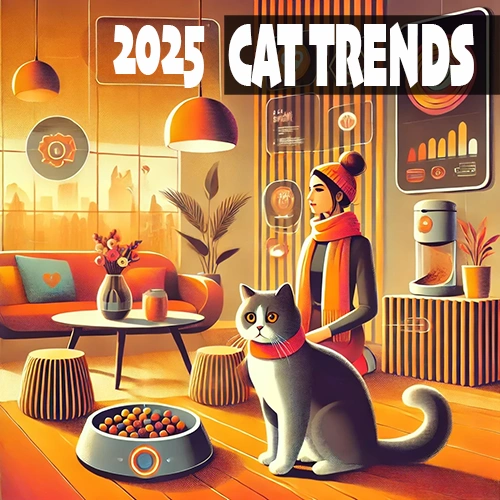
Top 5 Cat Trends for 2025: What Every Feline Lover Needs to Know
As we step into 2025, the world of cat ownership is brimming with exciting trends. From innovative products to [...]

Cat Weight Loss Tips & Tricks: Help Your Kitty Stay Healthy
Listen to the audio version of this blog post to enjoy our insights and tips on the go—perfect [...]
Still curious?